When was the Jurassic?
The Jurassic Period began about 201.4 million years ago and ended about 145 million years ago, lasting roughly 56 million years. It is the second of the three periods of the Mesozoic Era, after the Triassic and before the Cretaceous. The name comes from the Jura Mountains on the border between France and Switzerland, where its limestone rocks were first studied.
Geologists divide it into three parts, called epochs. Tap through them below.
Life recovers after the end-Triassic extinction. Dinosaurs spread across Pangaea; ichthyosaurs and plesiosaurs fill the seas.
Pangaea splits as the Central Atlantic opens. Sauropods grow huge; pliosaurs like Liopleurodon rule the Oxford Clay seas.
The age of giants: Brachiosaurus, Diplodocus, Stegosaurus and Allosaurus in North America and Portugal, and Archaeopteryx in Germany.
What the world looked like
At the start of the Jurassic, almost all land was joined in a single supercontinent, Pangaea. During the period it began to break apart. A northern landmass, Laurasia, slowly separated from a southern one, Gondwana, and the Central Atlantic Ocean started to open between North America and Africa.
The climate was a warm greenhouse. There were no ice caps at the poles, carbon dioxide levels were several times higher than today, and sea levels rose through the period. Shallow seas flooded large parts of the continents. Europe was not a solid landmass but an archipelago of islands in a warm, shallow sea.
Plants: a world without grass
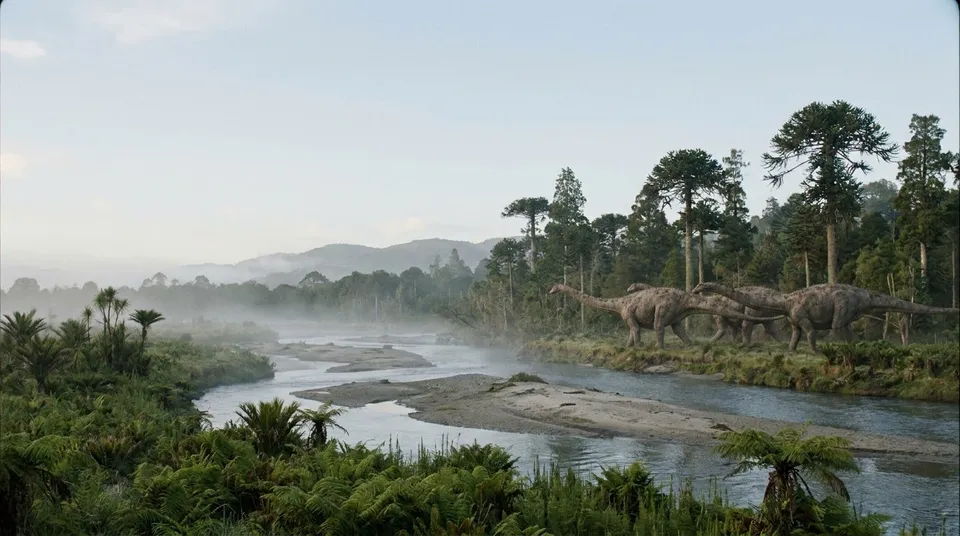
Jurassic landscapes would look familiar and strange at the same time. Forests were made of conifers, such as relatives of today’s monkey-puzzle trees and podocarps, together with ginkgos, cycads and the extinct cycad-like bennettitaleans. Tree ferns grew in damp places, and the ground was covered with ferns and horsetails.
What was missing was just as important. There was no grass anywhere, and flowering plants played no real part in the landscape. Plant-eating dinosaurs fed on tough, fibrous leaves and needles, which may be one reason some of them grew so large: a bigger gut can digest poor food more slowly and completely.
Animals of the Jurassic
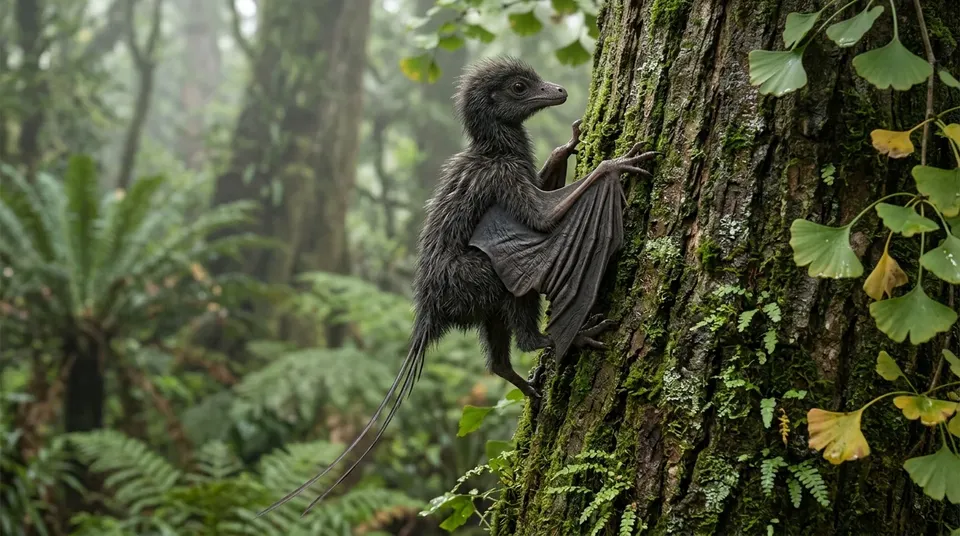
Dinosaurs dominated life on land. Long-necked sauropods became the largest land animals that have ever lived. Plated stegosaurs and early armoured dinosaurs grazed below them, while predators such as Allosaurus, Ceratosaurus and Torvosaurus hunted them. Small feathered dinosaurs were common, and by the Late Jurassic some had become early birds like Archaeopteryx.
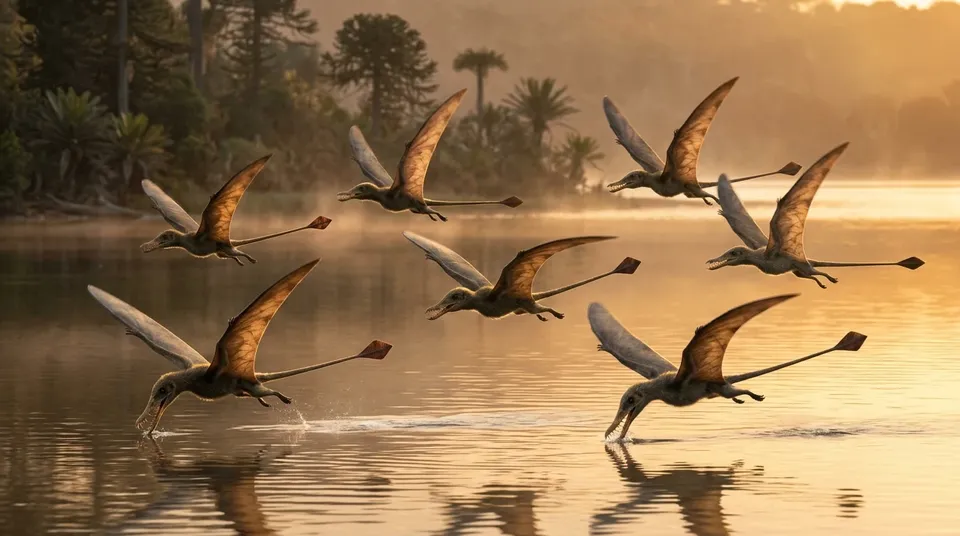
Pterosaurs flew overhead. Mammals existed but were small, mostly shrew-sized animals active at night. In the seas, ichthyosaurs, long-necked plesiosaurs and short-necked pliosaurs hunted fish, ammonites and belemnites, alongside marine crocodiles and the giant filter-feeding fish Leedsichthys.
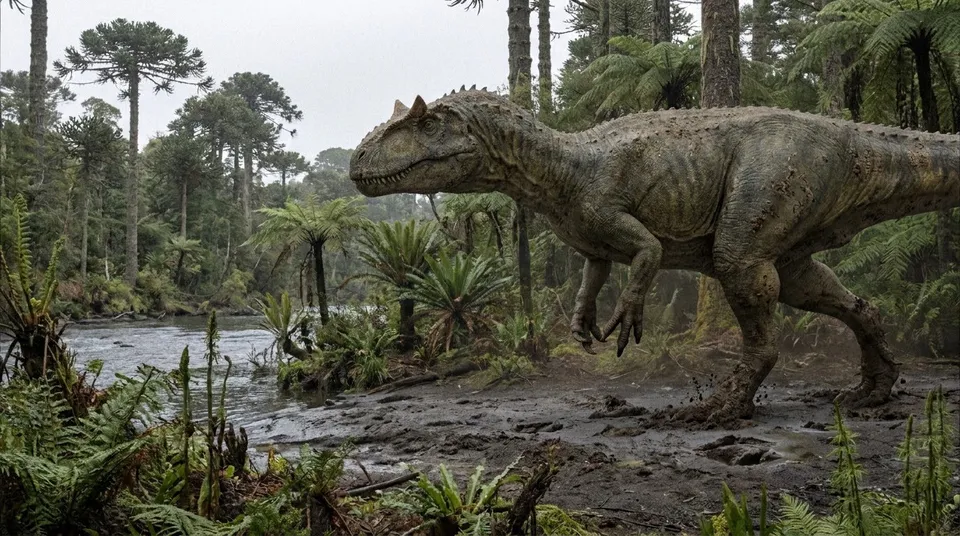 AllosaurusAllosaurus fragilis≈ 8.5 m (largest ≈ 9.7 m) · 155–145 million years ago
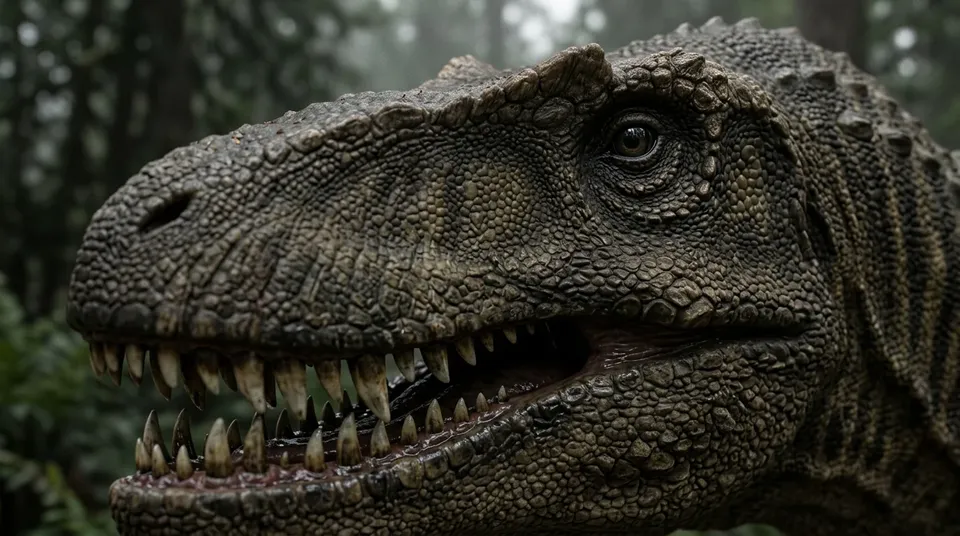 TorvosaurusTorvosaurus gurneyiup to ≈ 10 m · ≈ 150 million years ago
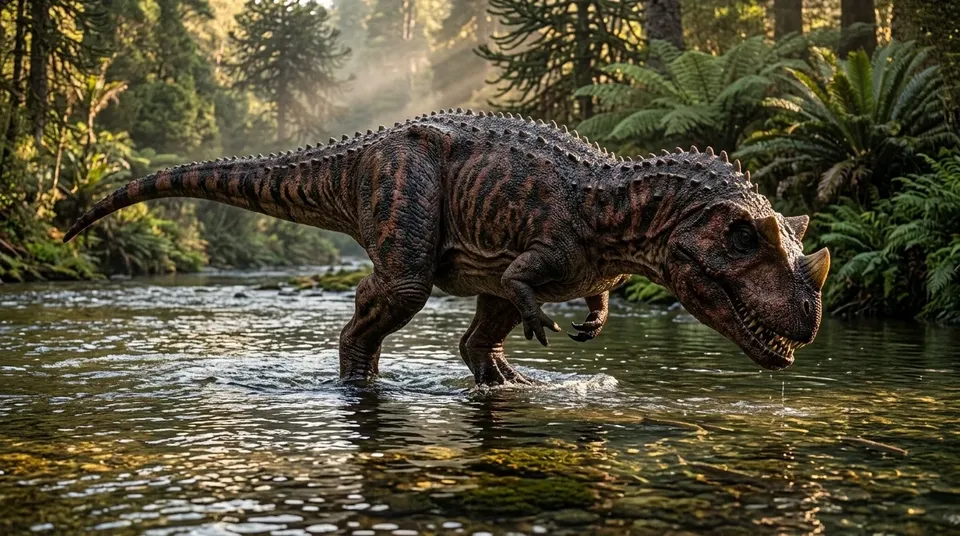 CeratosaurusCeratosaurus nasicornis≈ 5–6 m (largest ≈ 7 m) · ≈ 153–148 million years ago
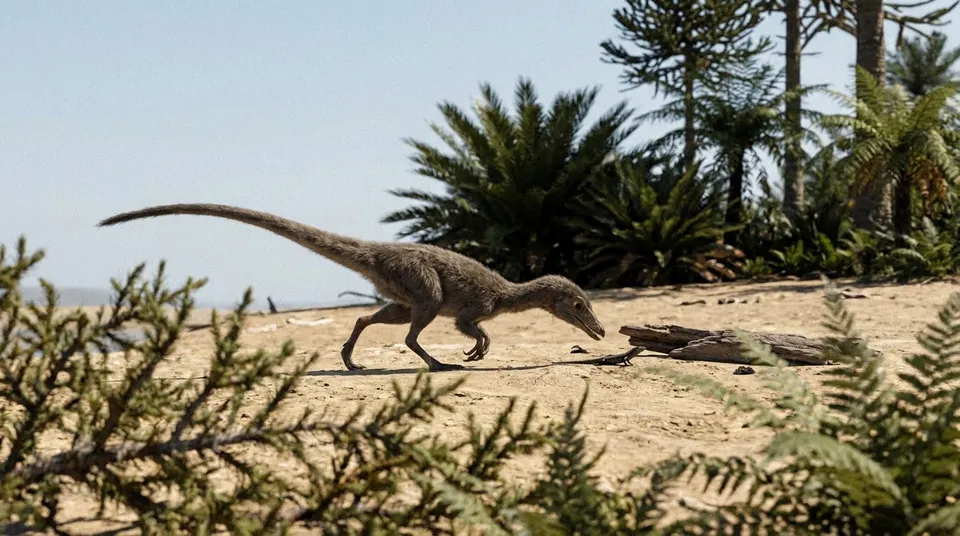 CompsognathusCompsognathus longipes≈ 1 m (incl. tail) · ≈ 150 million years ago
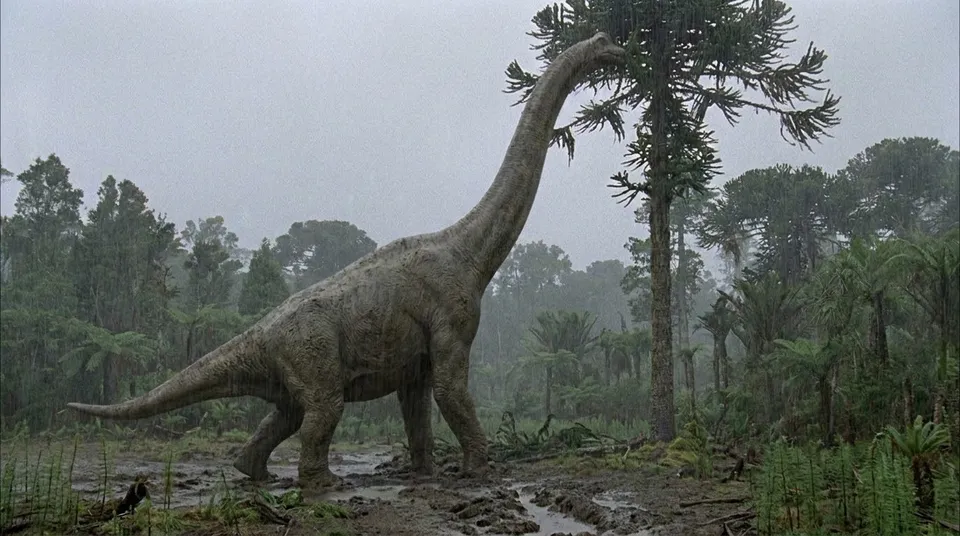 BrachiosaurusBrachiosaurus altithorax≈ 18–22 m · ≈ 154–150 million years ago
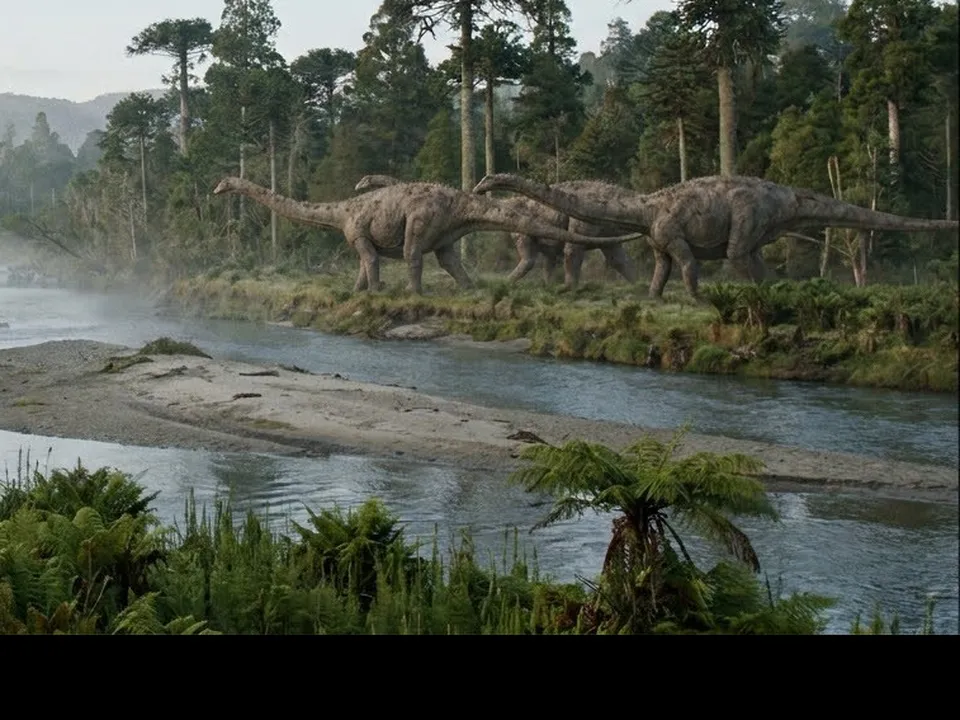 DiplodocusDiplodocus carnegii≈ 24–26 m · ≈ 154–152 million years ago
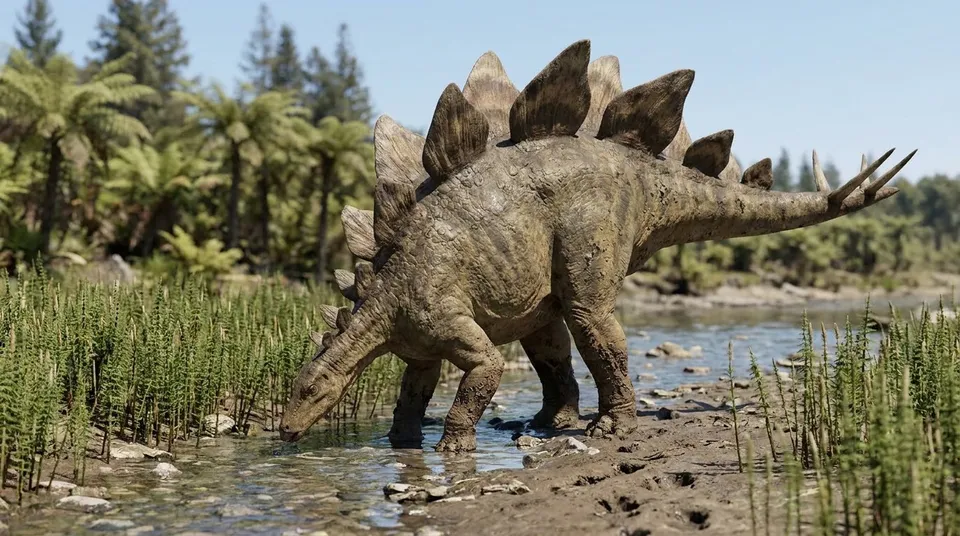 StegosaurusStegosaurus stenopsup to ≈ 9 m · 155–145 million years ago
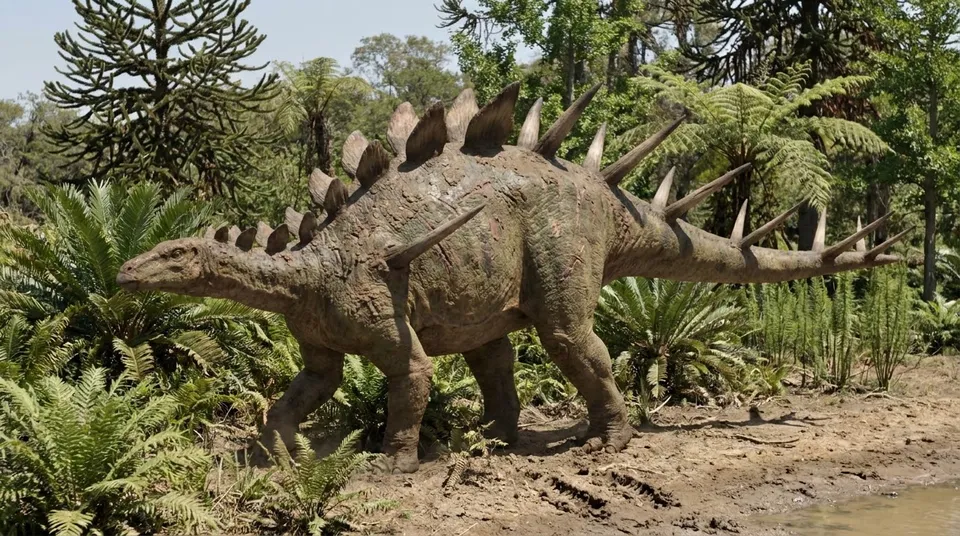 KentrosaurusKentrosaurus aethiopicus≈ 4–4.5 m · ≈ 152 million years ago
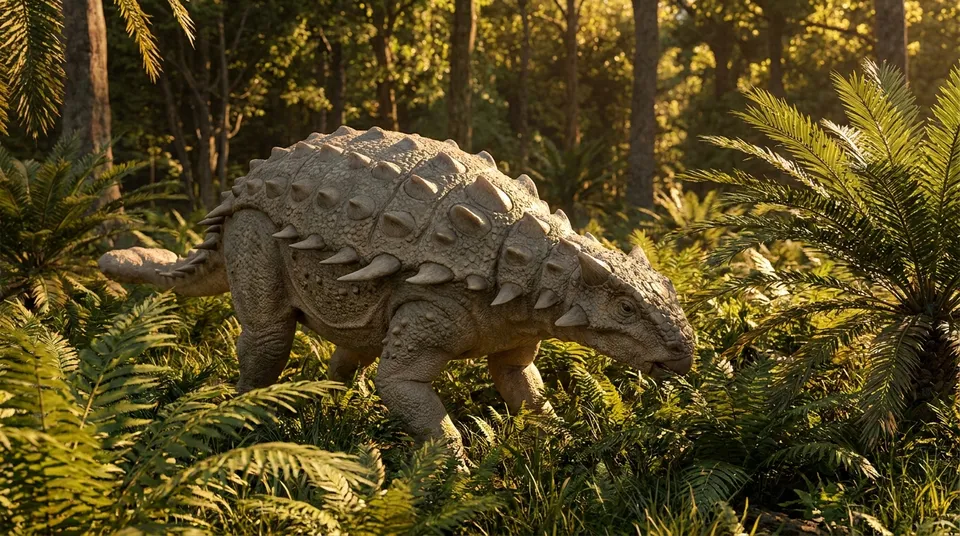 GargoyleosaurusGargoyleosaurus parkpinorum≈ 3–4 m · ≈ 154 million years ago
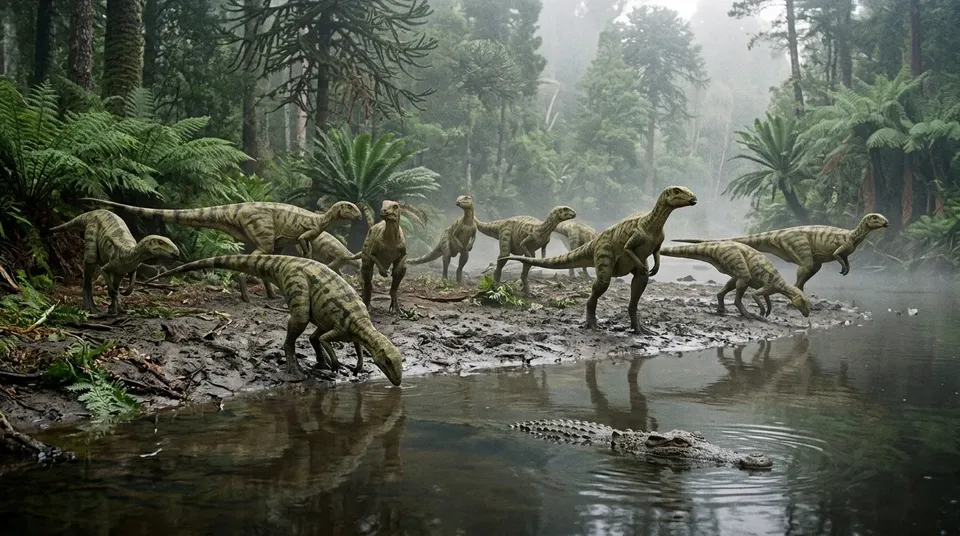 DryosaurusDryosaurus altus≈ 2.5–3.5 m · ≈ 155–148 million years ago
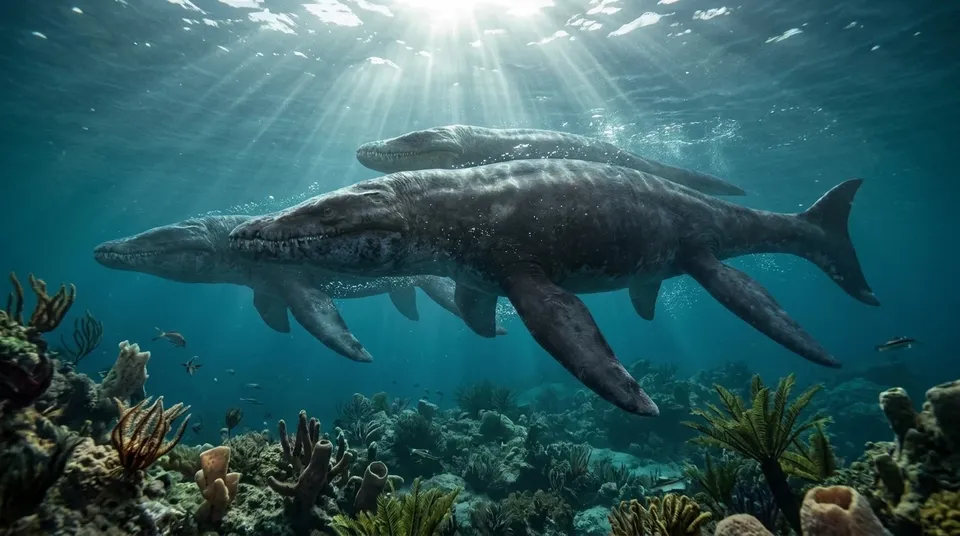 PliosaurusPliosauruslargest ≈ 10–12 m · ≈ 157–145 million years ago
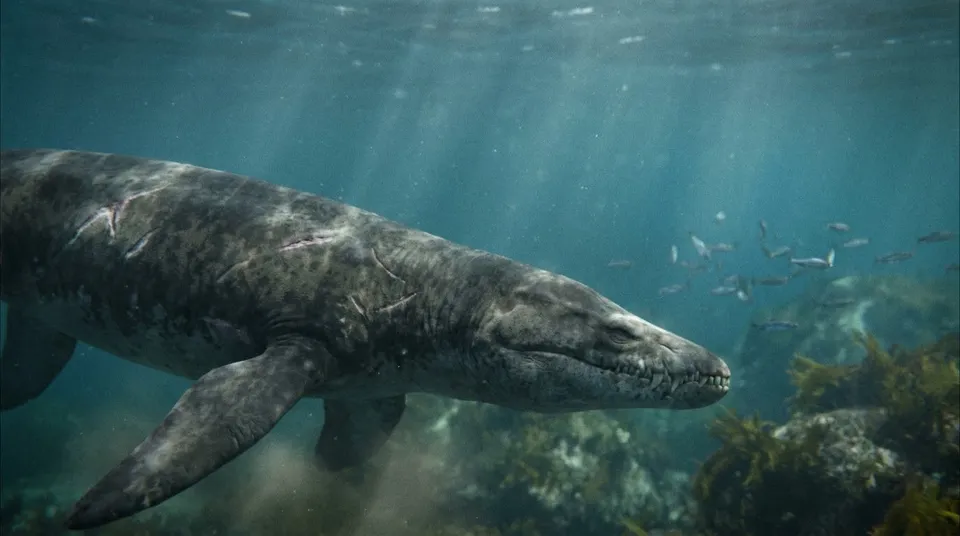 LiopleurodonLiopleurodon feroxup to ≈ 8 m · ≈ 165 million years ago
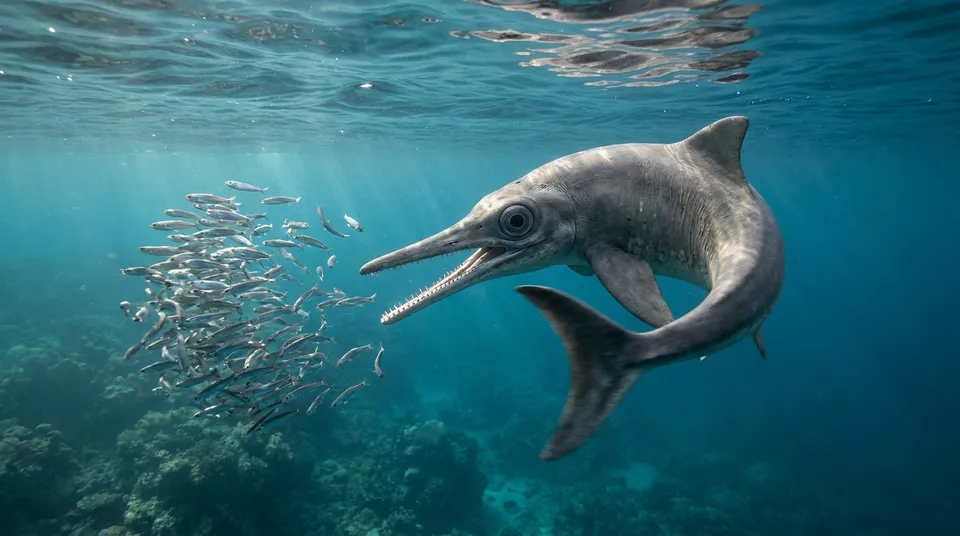 OphthalmosaurusOphthalmosaurus icenicus≈ 4 m (some larger) · ≈ 165–145 million years ago
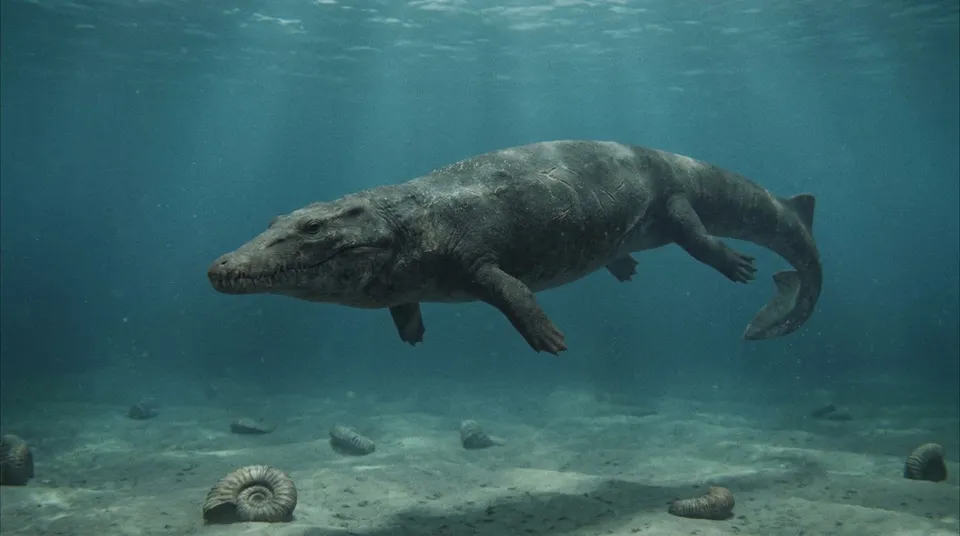 DakosaurusDakosaurus maximus≈ 4.5 m · ≈ 150 million years ago
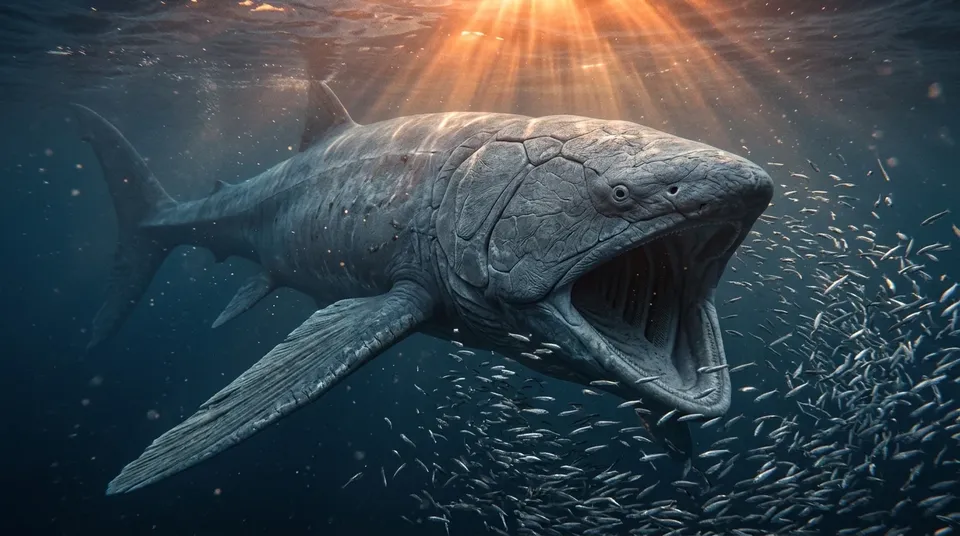 LeedsichthysLeedsichthys problematicus≈ 8–16.5 m · ≈ 165 million years ago (for at least 10 million years)
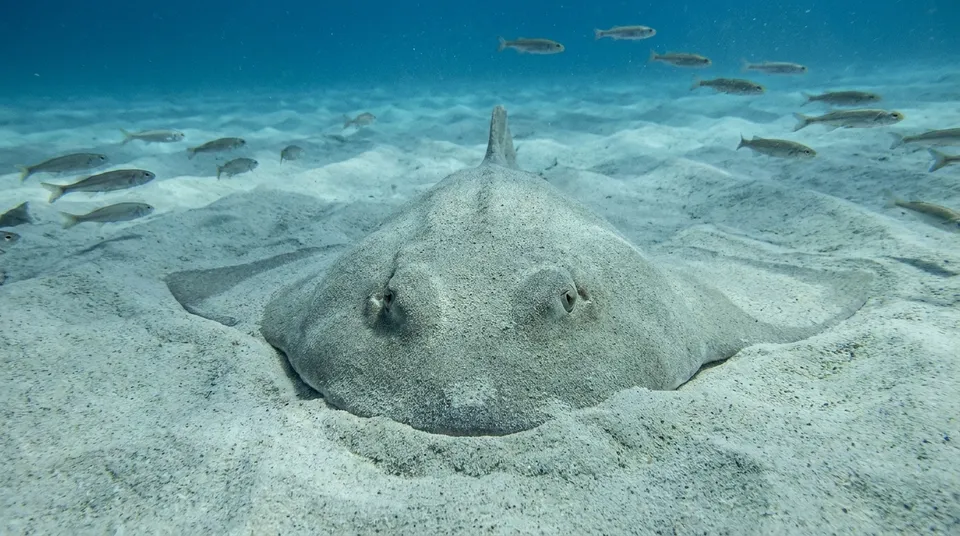 PseudorhinaPseudorhinaabout 1 m or less · ≈ 150 million years ago
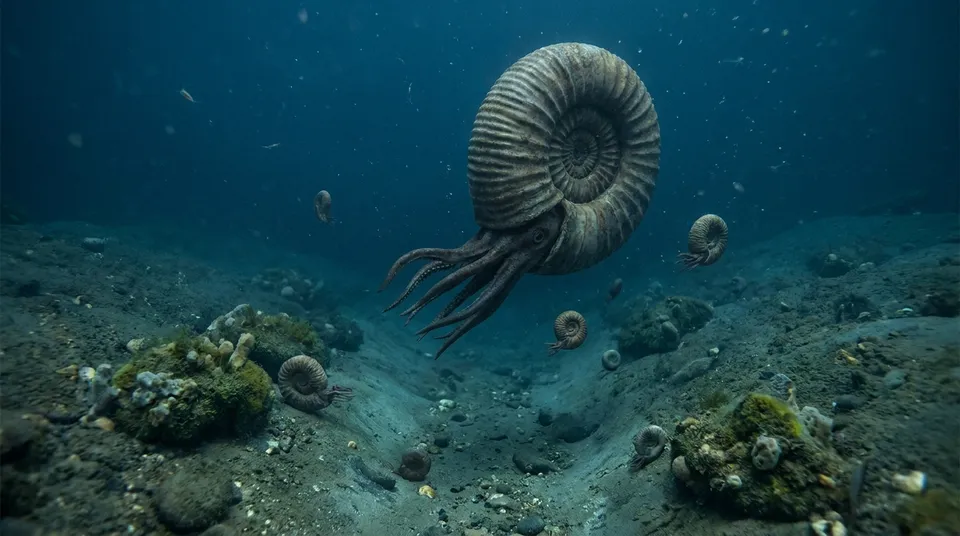 TitanitesTitanites anguiformisshell often over 1 m across · ≈ 147 million years ago
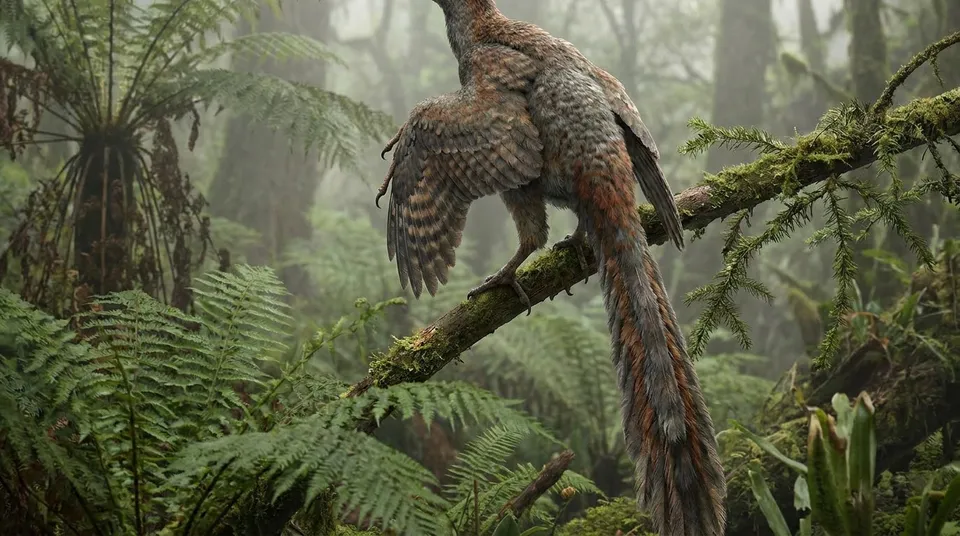
Where Jurassic fossils are found
A handful of places have given us most of what we know about Jurassic life:
- Morrison Formation, western USA. The most famous source of Late Jurassic dinosaurs, including Allosaurus, Stegosaurus, Brachiosaurus and Diplodocus.
- Lourinhã Formation, Portugal. Rocks of the same age as the Morrison, with many of the same kinds of dinosaurs, plus dinosaur eggs and embryos.
- Solnhofen, Germany. Fine lagoon limestones that preserve feathers, insect wings and almost every known Archaeopteryx.
- Oxford Clay, England. Middle Jurassic seabed with superb marine reptiles such as Liopleurodon.
- Tendaguru, Tanzania. African dinosaurs such as Giraffatitan and Kentrosaurus.
- Jurassic Coast, England. A UNESCO World Heritage Site, where Mary Anning found some of the first ichthyosaur and plesiosaur skeletons in the early 1800s.
How the Jurassic ended
The Jurassic began with a mass extinction: at the end of the Triassic, huge volcanic eruptions linked to the break-up of Pangaea wiped out many groups of animals and opened the way for dinosaurs to take over.
Its own ending was much quieter. There was no great mass extinction between the Jurassic and the Cretaceous, only a gradual turnover of species as continents moved apart and sea levels and climates changed. That is why the exact boundary is still one of the hardest in the geological timescale to pin down.
Key points for your test
- The Jurassic lasted from about 201 to 145 million years ago, the middle period of the Mesozoic Era.
- It is divided into the Early, Middle and Late Jurassic.
- Pangaea began to break apart into Laurasia (north) and Gondwana (south).
- The climate was warm and humid, with no polar ice caps and high sea levels.
- Plants were mainly conifers, cycads, ginkgos and ferns. There was no grass.
- Dinosaurs dominated: giant sauropods, Stegosaurus, Allosaurus, and the early bird Archaeopteryx.
- It started after the end-Triassic mass extinction and ended without a mass extinction.
Watch: A Day in the Jurassic
Spend one full day in the Late Jurassic, from a misty river at dawn to the open sea at night, in our 20-minute documentary.
Pressing play loads this video from YouTube (Google), which may set cookies and receive your IP address. See our privacy policy.
Sources
- International Commission on Stratigraphy. International Chronostratigraphic Chart.
- Encyclopaedia Britannica. Jurassic Period.
- National Geographic. What is the Jurassic period and why did it end?
- UNESCO World Heritage Centre. Dorset and East Devon Coast.
- See each animal’s page for species-specific sources.