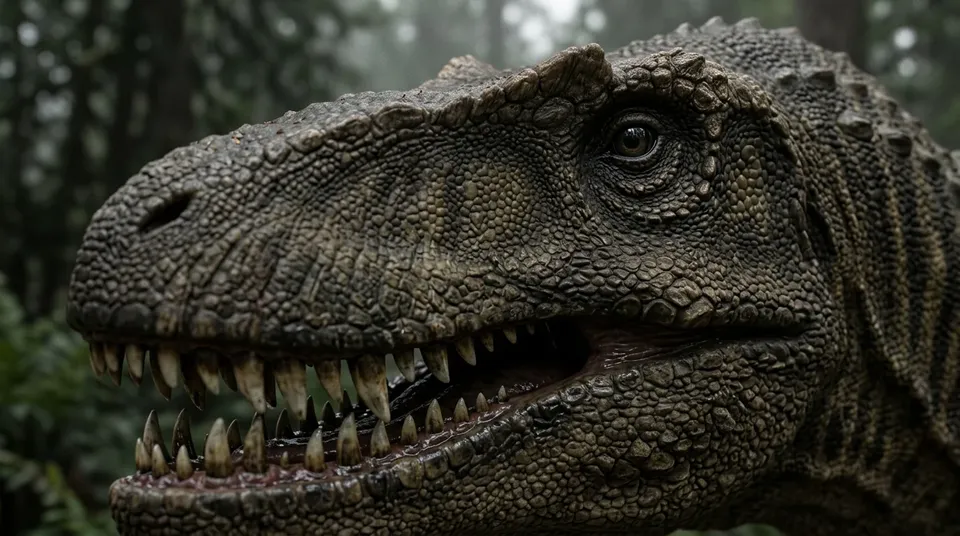
Europe’s biggest land predator
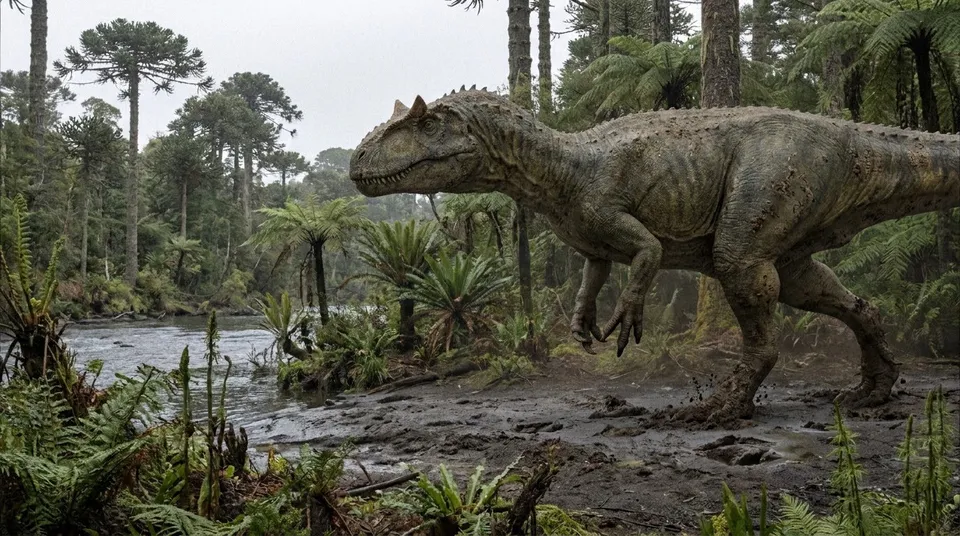
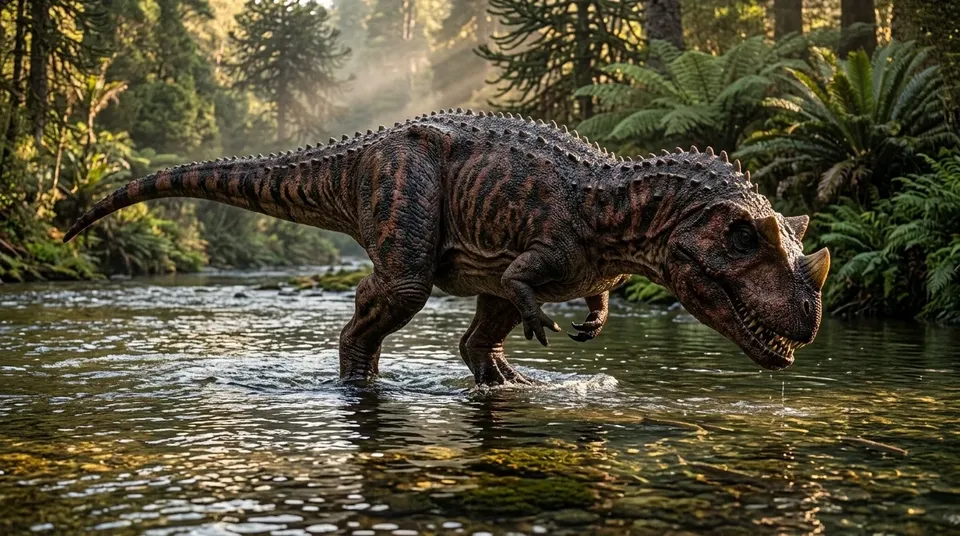
Torvosaurus was a huge, heavily built meat-eating dinosaur from the Late Jurassic. The first species, Torvosaurus tanneri, was described in 1979 from bones found in Colorado. In 2014 palaeontologists Christophe Hendrickx and Octávio Mateus named a second species from Portugal, Torvosaurus gurneyi, after the artist James Gurney, creator of Dinotopia.
The Portuguese species is the largest land predator known from Europe. Its fossils were found by an amateur fossil hunter in 2003 in the cliffs around Lourinhã, north of Lisbon.
How big was it?
Its skull was about 1.15 metres long, armed with blade-shaped teeth up to 10 centimetres long. From the upper jaw, the researchers estimated an animal around 10 metres long weighing perhaps four to five tonnes. That makes it smaller than later giants such as Tyrannosaurus or Giganotosaurus, but among the largest predators of the Jurassic.
Torvosaurus belonged to the megalosaurids, a group of big, long-snouted predators with powerful arms and large claws.
One genus, two sides of an ocean
The Portuguese and American Torvosaurus are very similar. The main differences are in the upper jaw: the American species has 11 or more teeth in each maxilla, the Portuguese one fewer than 11. About 150 million years ago, a young North Atlantic was opening between the two regions, and populations that became separated could evolve into different species.
Fossil eggs and embryos found in Portugal have also been linked to Torvosaurus, giving a rare glimpse of how these giants started life.
Part of the first dinosaur family ever named
Torvosaurus belongs to the megalosaurids, the family named after Megalosaurus. In 1824 the English geologist William Buckland described Megalosaurus from bones found near Oxford, the first dinosaur ever given a scientific name. Megalosaurids were large predators with long, low skulls, strong arms and a big claw on the thumb. They were widespread in the Middle and Late Jurassic.
The American species, Torvosaurus tanneri, was named in honour of Nathan Eldon Tanner, a senior leader of the Church of Jesus Christ of Latter-day Saints in Utah. Its bones were found at the Dry Mesa Quarry in Colorado by the collector James Jensen, whose team also unearthed some of the largest sauropod bones known.
Eggs from a Portuguese cliff
In 2005, in the cliffs of Porto das Barcas near Lourinhã, researchers found a clutch of more than a hundred fragments of eggshell together with embryonic bones. A study published in 2013 described them as the oldest known theropod embryos at the time and linked them to Torvosaurus, based on the shape of the tiny jaw bones and teeth.
Finds like this are extremely rare. They show that the giant predators of the Lourinhã floodplains nested nearby, and they give palaeontologists a chance to study how a ten-metre hunter started its life. Some of the material can be seen at the Museu da Lourinhã.
Measurements are estimates based on fossils and can change as new specimens are found. Illustrations on this page are artist reconstructions, not photographs.
 See it in our documentaryA Day in the Jurassic21 min · chapters, the science behind the film and sources
Sources
- Hendrickx & Mateus (2014). Torvosaurus gurneyi n. sp., the largest terrestrial predator from Europe. PLOS ONE 9(3): e88905.
- Galton & Jensen (1979). A new large theropod dinosaur from the Upper Jurassic of Colorado. Brigham Young University Geology Studies 26.
- Araújo et al. (2013). Filling the gaps of dinosaur eggshell phylogeny: Late Jurassic theropod clutch with embryos from Portugal. Scientific Reports 3.