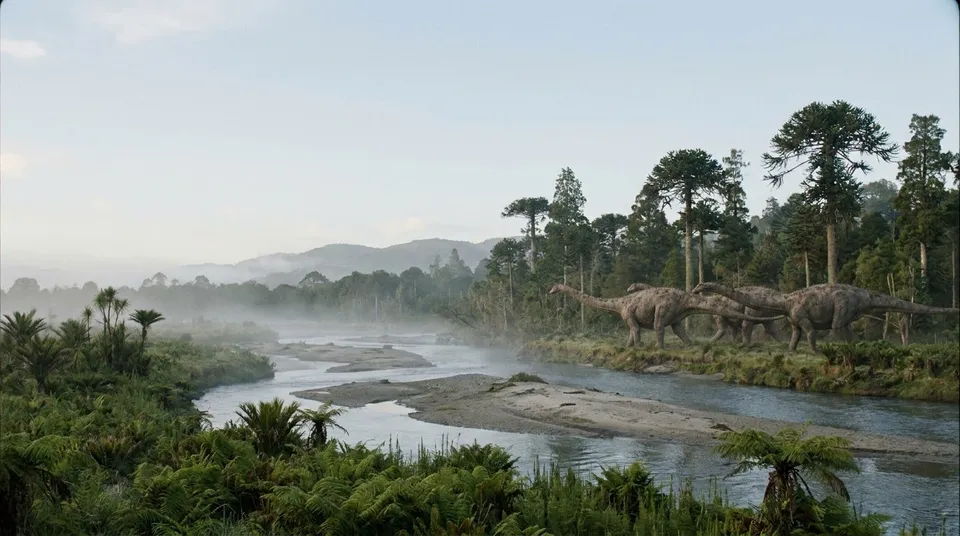
A record-breaking length
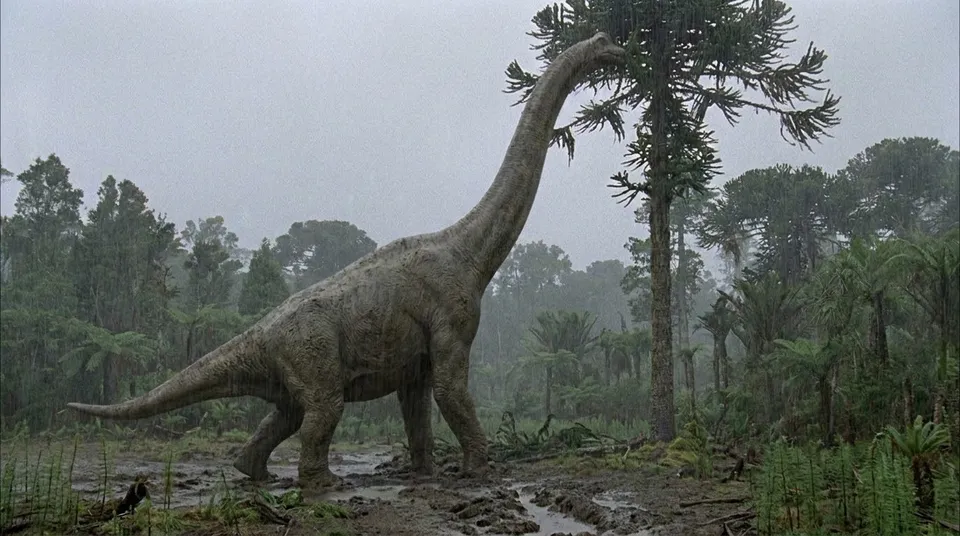
Diplodocus was a long-necked plant-eater that lived in western North America about 154 to 152 million years ago. The best-known species, Diplodocus carnegii, reached about 24 to 26 metres from nose to tail.
Much of that length was neck and tail. The tail alone had around 80 vertebrae, getting thinner and thinner towards a whip-like end. Compared with other sauropods its body was slim, and estimates of its weight are usually in the range of 12 to 15 tonnes.
Why “double beam”?
The palaeontologist Othniel Charles Marsh named Diplodocus in 1878. The name means “double beam” and refers to small bones under the tail, called chevrons, which have two forward- and backward-pointing prongs. They probably protected blood vessels when the tail rested on the ground.
Dippy: the dinosaur that travelled the world
In the early 1900s the industrialist Andrew Carnegie paid for the excavation of a near-complete skeleton in Wyoming, named Diplodocus carnegii after him. He then had plaster casts made and gave them to museums in London, Paris, Berlin, Vienna, Madrid, La Plata and other cities.
The London cast, nicknamed Dippy, was unveiled in 1905 and stood in the Natural History Museum for over a century before going on tour around the United Kingdom. For millions of people, Dippy was the first dinosaur they ever saw.
Teeth like a comb
Diplodocus had a long, low skull with thin, peg-like teeth only at the front of its jaws. It probably stripped leaves from branches by pulling its head back through them, like running a comb through hair. Its teeth wore down fast, and studies of their growth lines suggest that each tooth was replaced about once a month.
Could its tail break the sound barrier?
In 1997 a computer model suggested that a diplodocid could crack the tip of its tail like a bullwhip, faster than the speed of sound, producing a loud bang. The idea became very popular.
A 2022 study tested it with a more detailed model based on five diplodocid skeletons and on the strength of skin, tendons and ligaments. It found the tail tip could reach about 33 metres per second, more than 100 km/h, but that at the speed of sound the tail would have torn apart. Some researchers still defend the original idea, so the debate is not completely closed. Either way, a blow from that tail would have hurt.
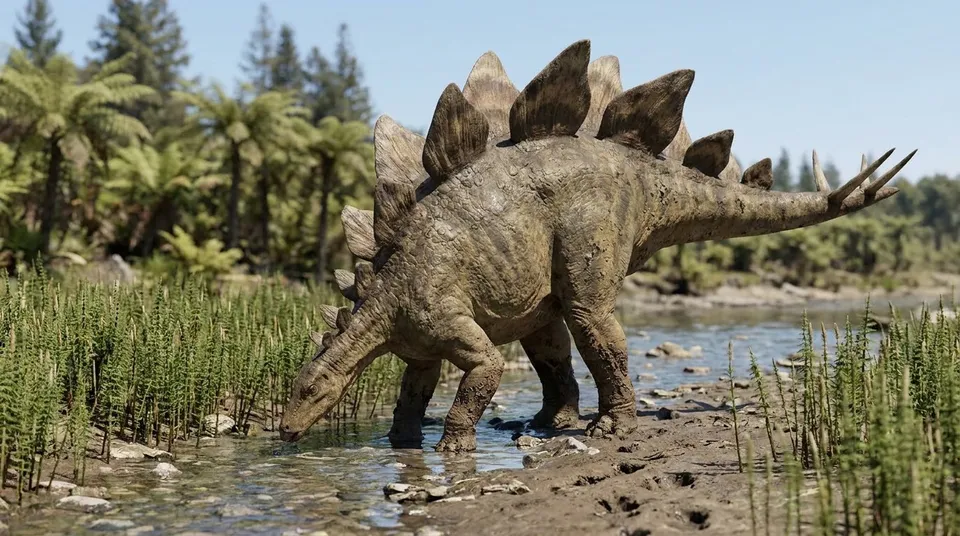
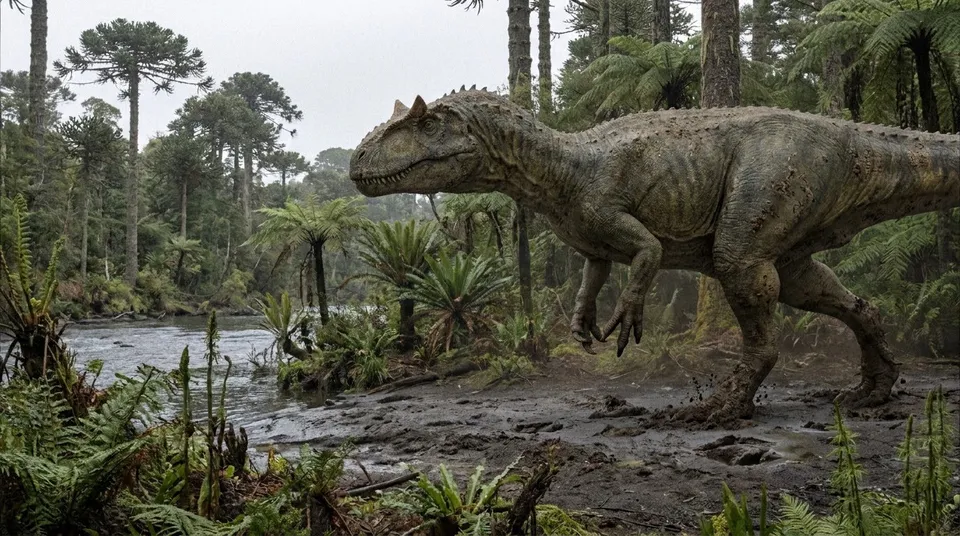
Measurements are estimates based on fossils and can change as new specimens are found. Illustrations on this page are artist reconstructions, not photographs.
 See it in our documentaryA Day in the Jurassic21 min · chapters, the science behind the film and sources
Sources
- Conti et al. (2022). Multibody analysis and soft tissue strength refute supersonic dinosaur tail. Scientific Reports 12:19245.
- Myhrvold & Currie (1997). Supersonic sauropods? Tail dynamics in the diplodocids. Paleobiology 23(4).
- D’Emic et al. (2013). Evolution of high tooth replacement rates in sauropod dinosaurs. PLOS ONE 8(7):e69235.
- Hatcher (1901). Diplodocus (Marsh): its osteology, taxonomy, and probable habits. Memoirs of the Carnegie Museum 1.