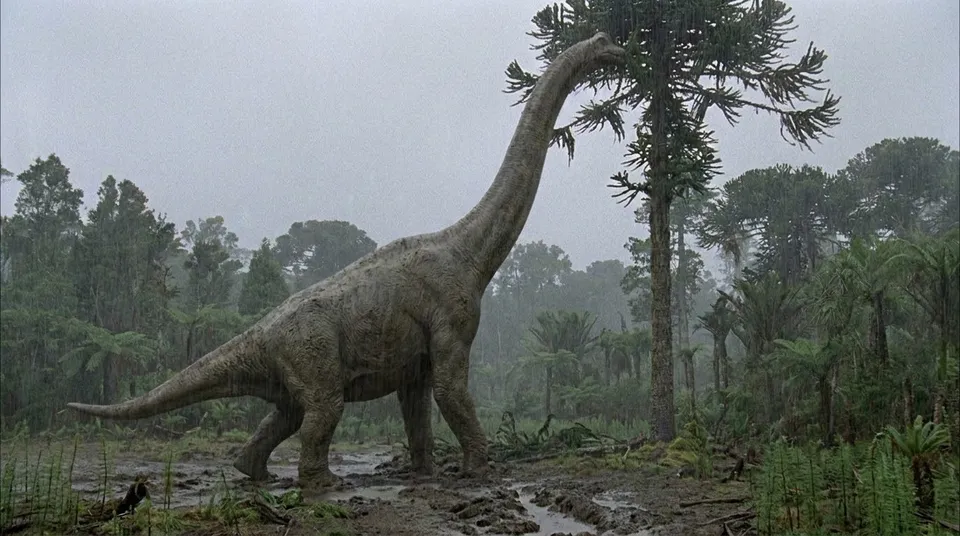
The giraffe-shaped giant
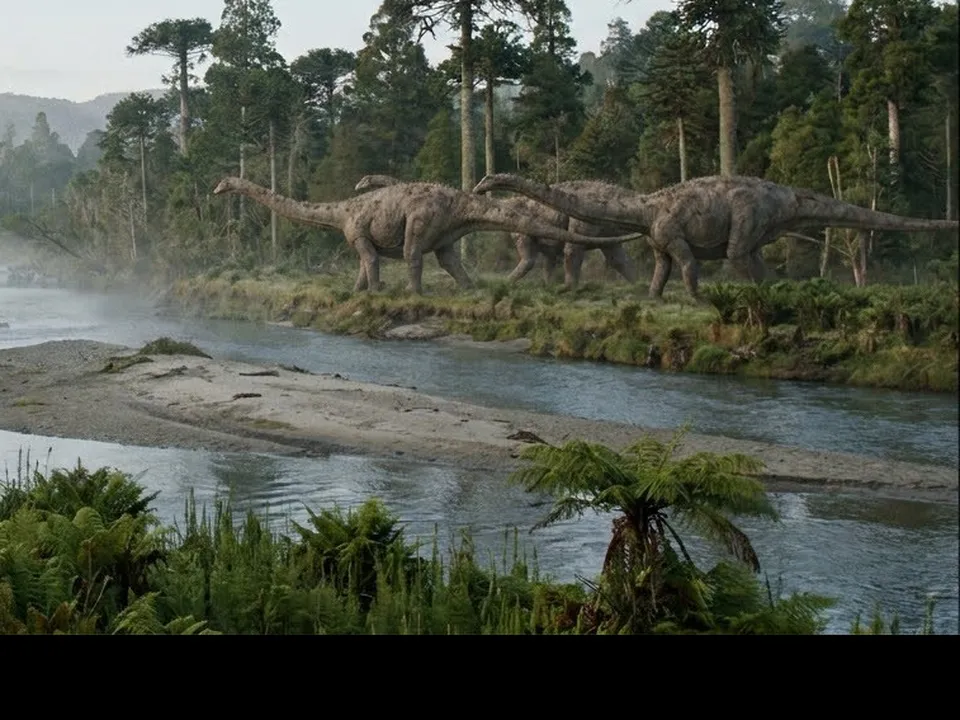
Brachiosaurus was an enormous long-necked plant-eater, a sauropod, that lived in western North America about 154 to 150 million years ago. Its name means “arm lizard”, because its front legs were longer than its back legs. Its species name, altithorax, means “deep chest”.
That build gave it sloping shoulders and a neck that rose steeply, so it could feed high in the trees, far above the reach of most other plant-eaters around it.
Discovery on Riggs Hill
The first skeleton was found in July 1900 near Grand Junction, Colorado, by a team from the Field Museum in Chicago led by Elmer Riggs. Riggs named it in 1903 and declared it “the largest known dinosaur”. The site, now called Riggs Hill, is marked with a plaque.
Despite its fame, Brachiosaurus is one of the rarer animals of the Morrison Formation. Only a few partial skeletons are known, far fewer than its relative Camarasaurus.
How big was it?
Most estimates put Brachiosaurus at 18 to 22 metres long. Its weight is much harder to pin down: published estimates for the best skeleton range from about 28 to more than 50 tonnes, depending on the method used. That skeleton also seems to come from an animal that was not fully grown, so adults may have been bigger still.
For many decades it was thought to be the biggest dinosaur of all. Later discoveries, such as the giant titanosaurs of South America, turned out to be heavier.
The Brachiosaurus that wasn’t
The tall skeleton in Berlin’s Museum für Naturkunde, one of the largest mounted dinosaurs in the world, was long called Brachiosaurus. It comes from Tanzania and was originally described as a species of Brachiosaurus in 1914.
In 2009 a detailed comparison showed that the African animal differs from the American one in almost every bone that can be compared, and it is now placed in its own genus, Giraffatitan. Many popular images of “Brachiosaurus”, including the high crest over the nose, are actually based on Giraffatitan.
Did it live in lakes?
Early scientists thought animals this heavy could not support themselves on land, and pictured Brachiosaurus standing in deep lakes, using its high nostrils as a snorkel. We now know this is wrong. Its legs were built like columns to carry its weight on land, and at depth the water pressure would have made breathing almost impossible. Brachiosaurus was a land animal that browsed the treetops.
Measurements are estimates based on fossils and can change as new specimens are found. Illustrations on this page are artist reconstructions, not photographs.
 See it in our documentaryA Day in the Jurassic21 min · chapters, the science behind the film and sources