A small, fast hunter
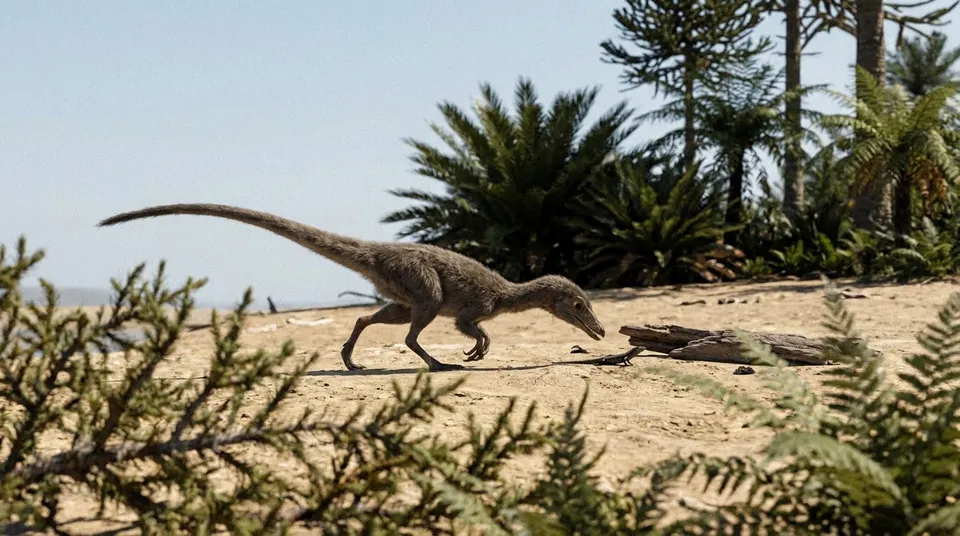
Compsognathus was a small two-legged predator about the size of a turkey, most of its length taken up by a long tail. It lived about 150 million years ago on the islands of the Late Jurassic archipelago that covered what is now southern Germany and France.
The first skeleton was found in the Solnhofen limestone of Bavaria and named in 1859. A second, larger specimen came from Canjuers in southern France. For more than a century it was known as the smallest dinosaur.
A lizard in its stomach
Inside the ribcage of the German skeleton lies the skeleton of a small, fast lizard called Bavarisaurus. It is direct evidence of what Compsognathus ate: quick, small animals that it chased down on the ground.
Did it have feathers?
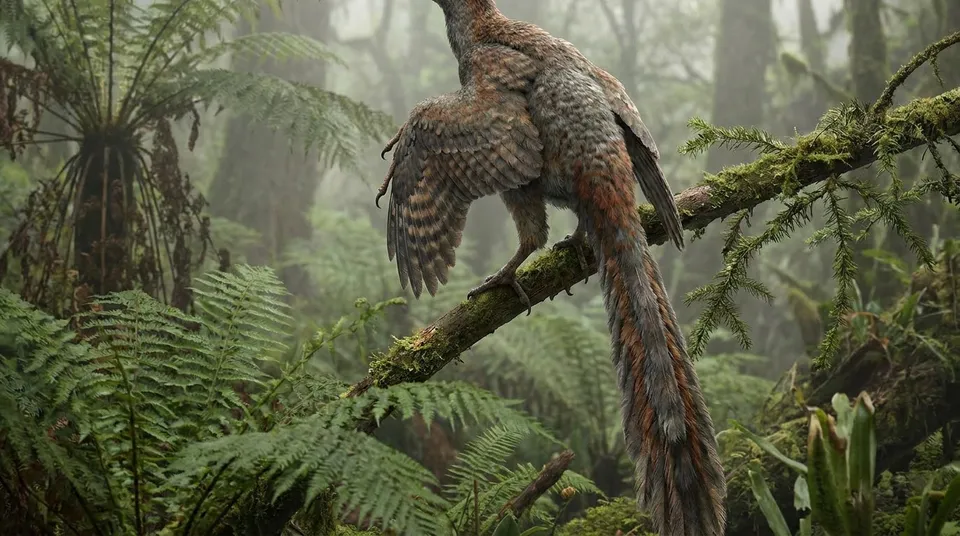
No feathers have been preserved on the two Compsognathus skeletons. However, some of its close relatives, such as Sinosauropteryx from China, are found with a coat of simple, hair-like filaments. Many palaeontologists therefore think Compsognathus was probably fuzzy too, though we cannot be sure.
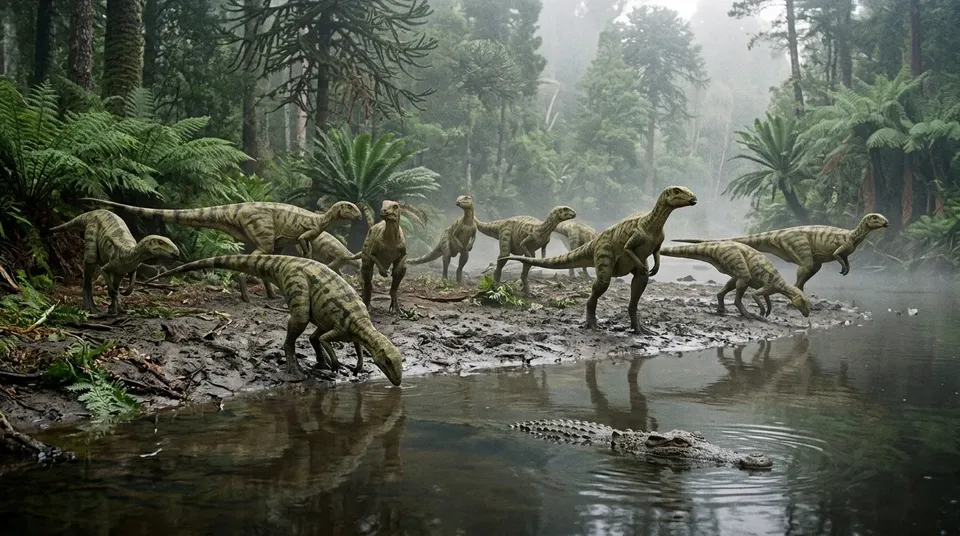
Films often show Compsognathus attacking large animals in packs. There is no evidence for this: it was a solitary hunter of small prey as far as we know.
Two skeletons, two countries
Compsognathus is known from only two good skeletons. The first was found in the limestone near Jachenhausen in Bavaria and described by Johann Andreas Wagner in 1859, just before Archaeopteryx became famous. It is small, under a metre long, and is probably a young animal.
The second skeleton was found near Canjuers in the south of France and described in 1972 as a new species, Compsognathus corallestris. It is larger, about 1.25 metres long. Later studies concluded that both belong to the same species, Compsognathus longipes, with the French one simply an older individual.
Once the smallest dinosaur
For more than a century, Compsognathus was famous as the smallest dinosaur known. That title is long gone. Many smaller non-bird dinosaurs have since been found, such as some troodontids and the feathered Microraptor, and modern birds, which are living dinosaurs, include species that weigh just a few grams.
Its hands were also misunderstood. For years Compsognathus was described with only two fingers, but a re-examination published in 2007 showed it had three, like most of its relatives. Films have often shown it hunting in large swarms, but there is no fossil evidence for that kind of behaviour.
Measurements are estimates based on fossils and can change as new specimens are found. Illustrations on this page are artist reconstructions, not photographs.
 See it in our documentaryA Day in the Jurassic21 min · chapters, the science behind the film and sources