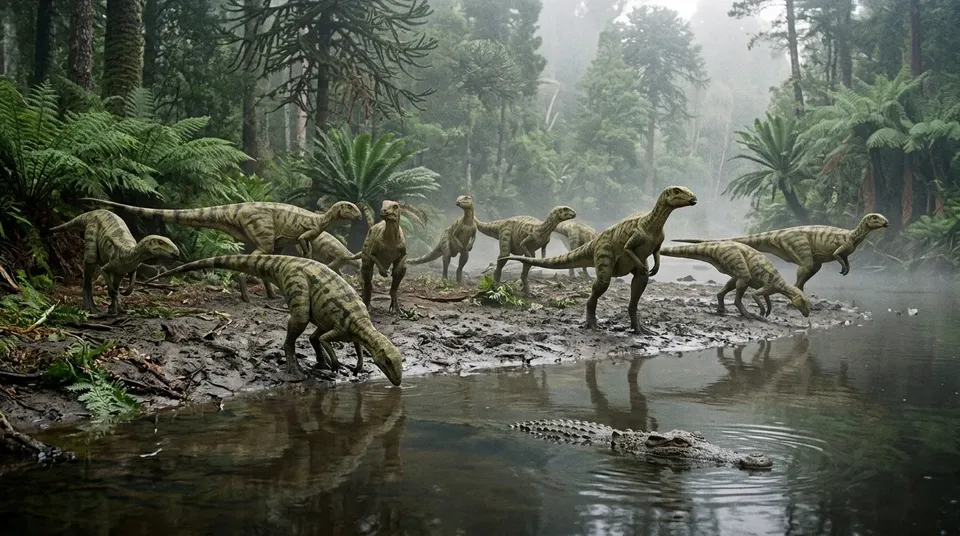
The sprinter of the floodplain
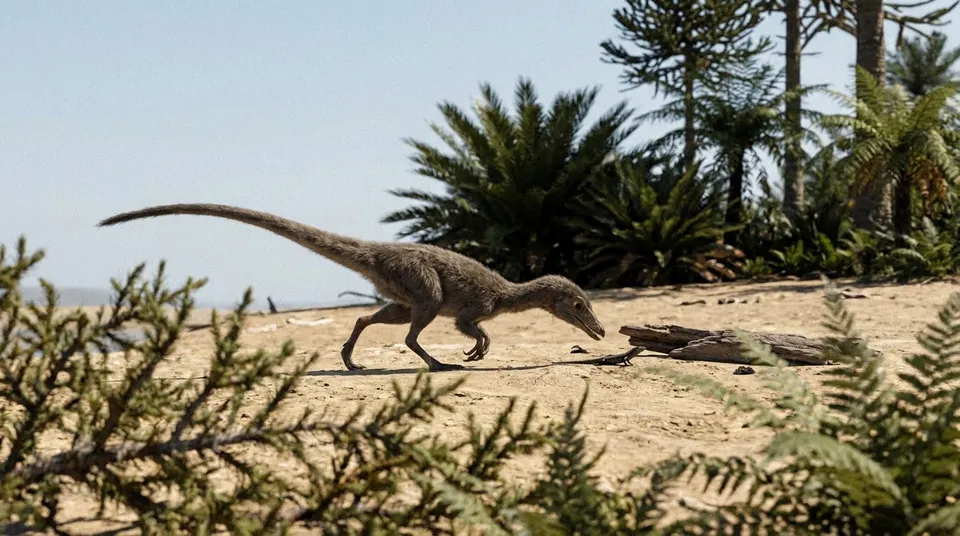
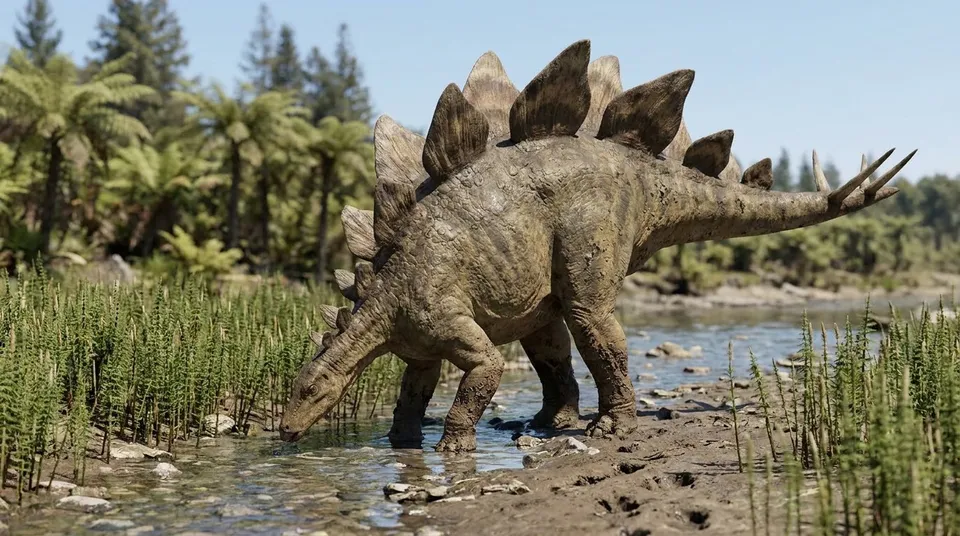
Dryosaurus was a small plant-eating dinosaur that walked on two long, slender legs. It lived in the Morrison Formation of western North America alongside Stegosaurus, the giant sauropods and the predators that hunted them.
Its name means “tree lizard” (from the Greek drys, tree or oak), probably because Marsh imagined it living in forests. It had a horny beak at the front of its mouth for cropping plants.
Built to run
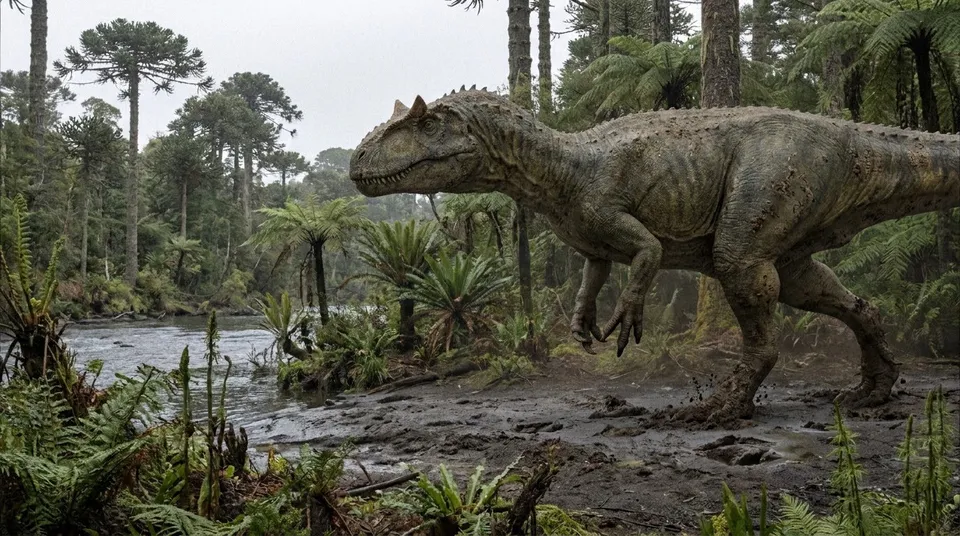
With long shins and a stiff tail for balance, Dryosaurus was built for speed. Without plates, spikes or great size, running away was probably its main defence against Allosaurus and Ceratosaurus. Many fossils of young Dryosaurus have been found, and studies of their bones show they grew quickly.
A close relative, Dysalotosaurus, lived in Tanzania at the same time, another sign of how connected the Late Jurassic world still was.
An early relative of the duck-billed dinosaurs
Dryosaurus was an early iguanodontian, a member of the plant-eating group that later produced Iguanodon and, in the Cretaceous, the hugely successful duck-billed hadrosaurs. It had a horny beak at the front of its mouth for cropping plants and leaf-shaped cheek teeth for chewing them.
It had close relatives on other continents. Dysalotosaurus, from the Tendaguru beds of Tanzania, is known from hundreds of individuals of all ages. Eousdryosaurus lived in Portugal at the same time, and Valdosaurus survived into the Early Cretaceous of England. These finds show that small, fast dryosaurids were spread widely across the Late Jurassic world.
Growing up fast
Othniel Charles Marsh first described the animal in 1878 as a species of another genus, and gave it its own name, Dryosaurus, in 1894. Since then many skeletons have been found, including very young individuals at Dinosaur National Monument on the Utah–Colorado border.
Thin sections of their bones show rapid growth in the early years. Young Dryosaurus had relatively large eyes and short snouts, and their proportions changed as they grew. Adults reached roughly three metres in length, much of it tail, and weighed perhaps around 80 to 100 kilograms. With predators like Allosaurus, Ceratosaurus and Torvosaurus around, growing up quickly would have been a big advantage.
Measurements are estimates based on fossils and can change as new specimens are found. Illustrations on this page are artist reconstructions, not photographs.
 See it in our documentaryA Day in the Jurassic21 min · chapters, the science behind the film and sources