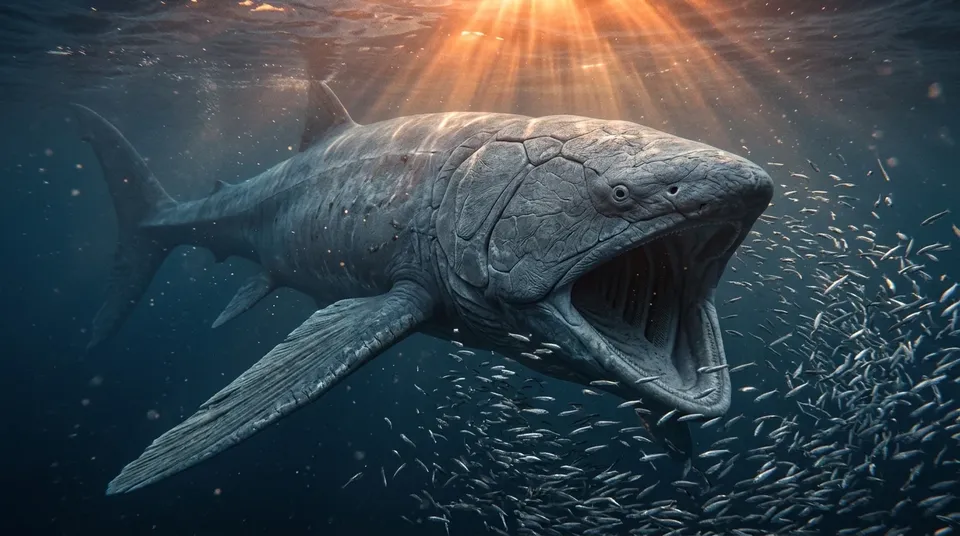
A fish the size of a whale shark
Leedsichthys was an enormous bony fish that lived in the Middle and Late Jurassic. It is named after Alfred Leeds, the collector who found the first remains in the Oxford Clay near Peterborough, England, in 1886. Its species name, problematicus, reflects how hard its fossils are to interpret: much of its skeleton was cartilage or thin bone that rarely survived.
How big did it get?
Older estimates of up to 27 metres were little more than guesswork. A 2013 study counted growth rings in its bones, much like tree rings, and estimated that individuals reached 8 to 9 metres in about 20 years and around 16.5 metres after 38 years or more. That would rival or exceed today’s whale shark.
The first ocean giant to eat plankton
Instead of teeth, Leedsichthys had a fine mesh on its gills to sieve plankton from the water as it swam. Before it, no back-boned filter feeder is known to have grown beyond about half a metre. Its appearance suggests a major change in the Jurassic oceans, with plankton becoming abundant enough to feed giants. Leedsichthys was the first known animal to fill the role later taken by whale sharks, basking sharks and baleen whales.
A farmer, a brickpit and a problem
Alfred Nicholson Leeds was a gentleman farmer who spent decades collecting fossils from the brickpits of the Oxford Clay around Peterborough, first together with his elder brother Charles and later helped by his son, Edward Thurlow Leeds. The Leeds collection became one of the most important sources of Jurassic marine reptiles and fish in the world.
The British Museum palaeontologist Arthur Smith Woodward named Leedsichthys problematicus in 1889. The problem was that much of its skeleton was made of cartilage, which rarely fossilises. What remained were broken plates and gill rakers that were hard to interpret. Since then remains have been found in other parts of England, in France and Germany, and as far away as Chile, which shows it swam across much of the Jurassic ocean.
A dynasty of giant filter feeders
Leedsichthys belongs to the pachycormids, an extinct family of bony fish. A study published in Science in 2010 showed that the family produced a whole series of large filter feeders, such as Bonnerichthys, that lasted for about 100 million years, until the end of the Cretaceous.
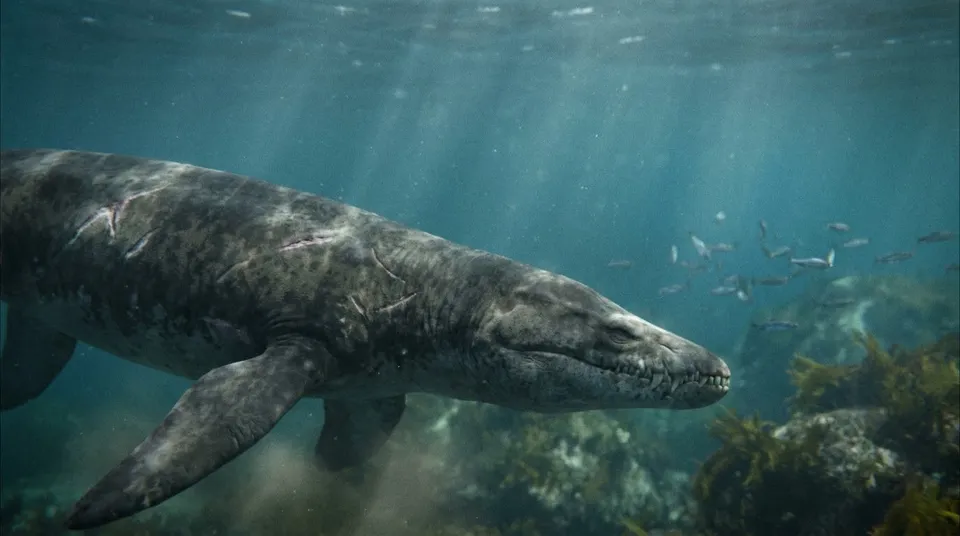
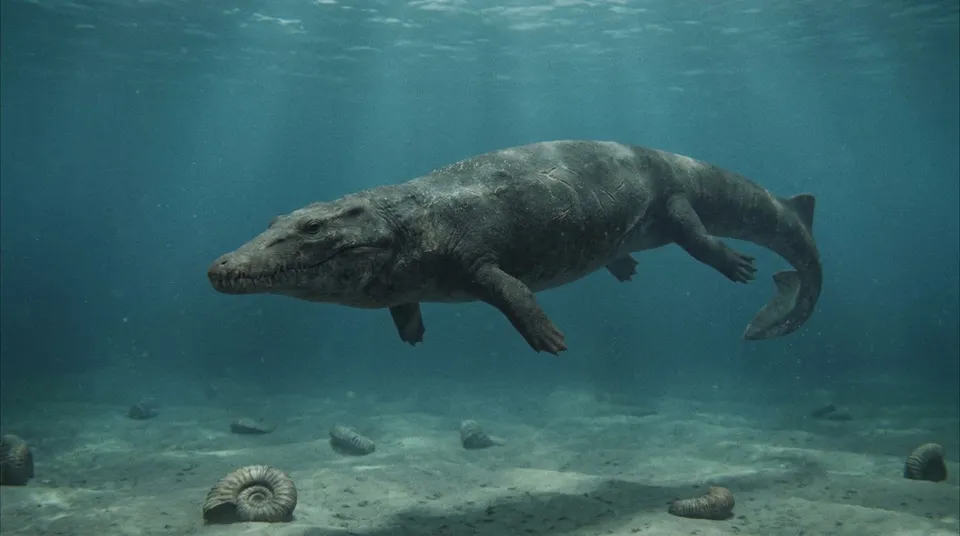
When they disappeared, their niche was later taken over by whale sharks, manta rays and baleen whales. Some Leedsichthys bones show bite marks, possibly from big sea crocodiles or pliosaurs, suggesting that even a giant was not completely safe.
Measurements are estimates based on fossils and can change as new specimens are found. Illustrations on this page are artist reconstructions, not photographs.
 See it in our documentaryA Day in the Jurassic21 min · chapters, the science behind the film and sources