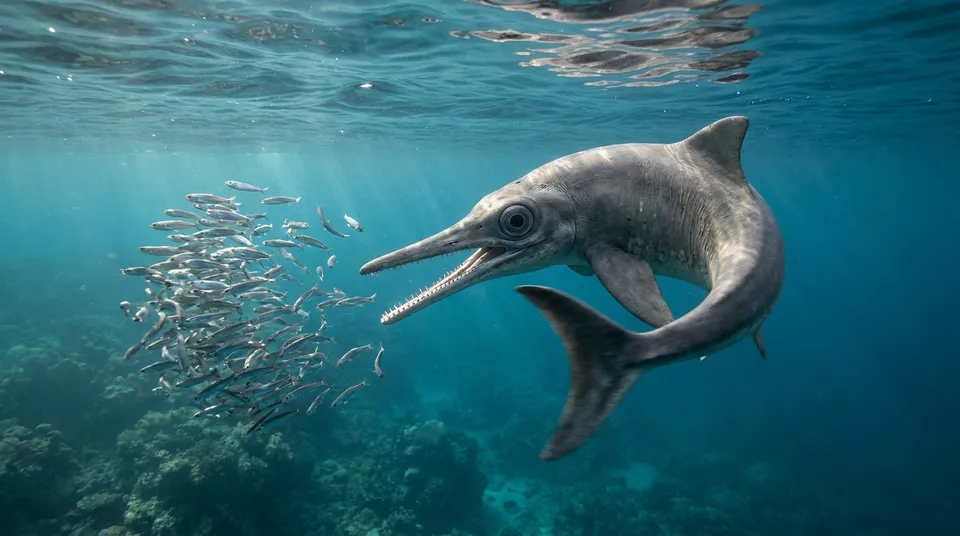
The dolphin of the Jurassic
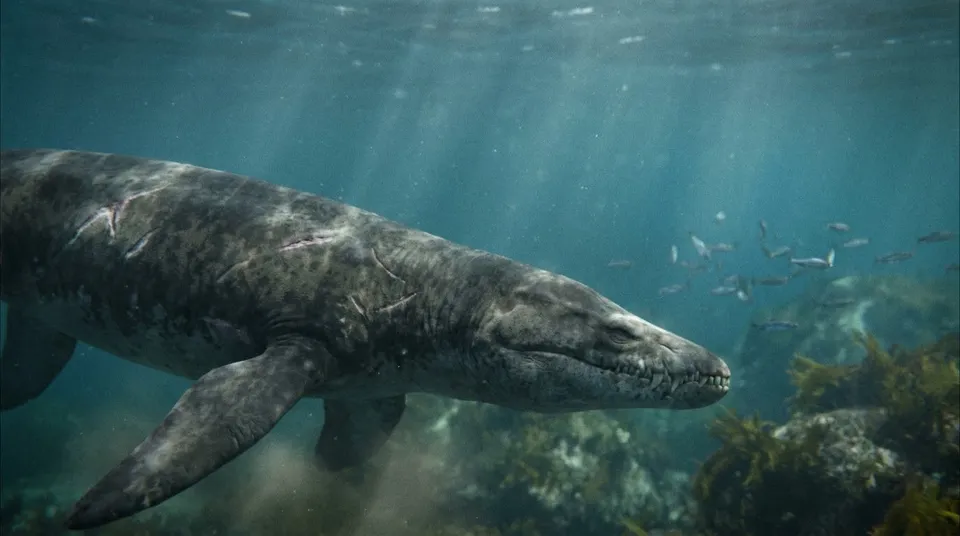
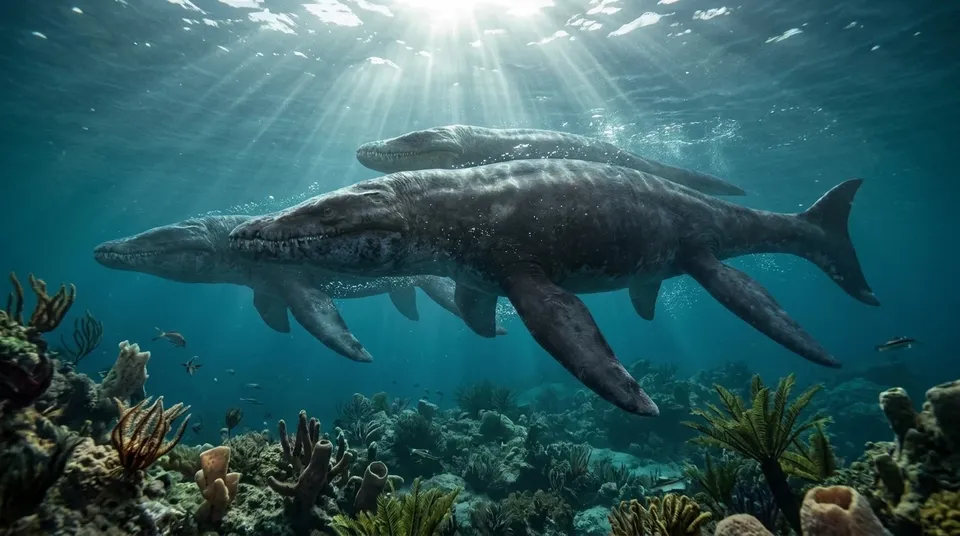
Ophthalmosaurus was an ichthyosaur, one of the marine reptiles that evolved a body astonishingly similar to a dolphin’s: a streamlined shape, a dorsal fin, flippers and a powerful crescent-shaped tail. It lived in the seas of the Middle and Late Jurassic, and many fine skeletons come from the Oxford Clay of England.
Typical adults were around 4 metres long. Ichthyosaurs breathed air, and fossils of mothers with unborn young show they gave birth to live babies at sea rather than laying eggs on land.
Eyes the size of grapefruit
Its name means “eye lizard”. The eyes were enormous, up to about 22 centimetres across. Relative to its body, that is among the largest eyes of any vertebrate known.
A study of ichthyosaur eyes concluded that animals like Ophthalmosaurus could see well in very low light, which suggests they dived deep, perhaps several hundred metres, to hunt squid-like animals in the dark.
Built for speed and depth
Ophthalmosaurus was around four metres long, with a deep, rounded body that tapered to a crescent-shaped tail fin. Its swimming style was like that of a tuna: the body stayed fairly stiff while the tail beat from side to side, an efficient way to cruise over long distances.
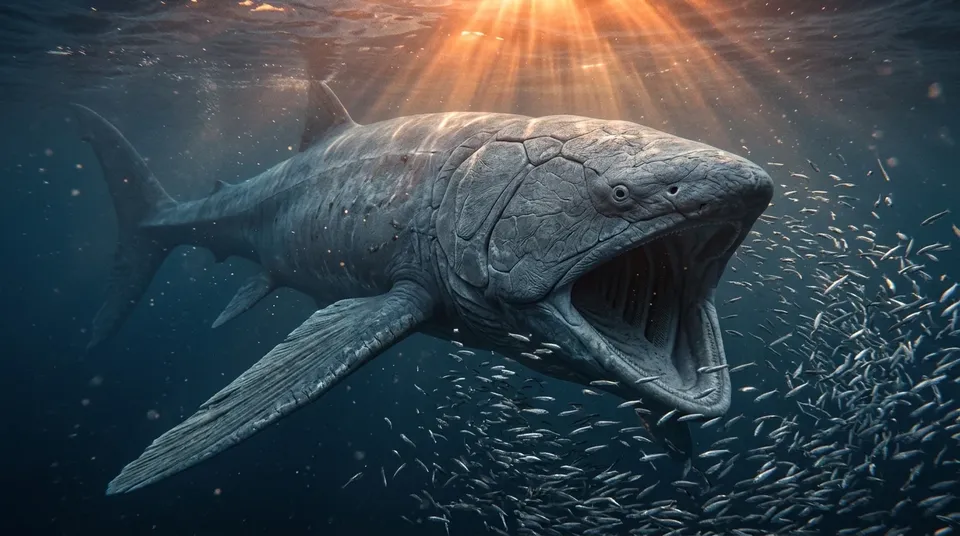
Its teeth were small compared with other ichthyosaurs, and some skulls seemed almost toothless, so it probably fed on soft prey like squid and small fish. Some of its bones show damage similar to decompression sickness, the bends, which in modern animals is linked to deep diving. Together with the huge eyes, this supports the idea that it hunted in deep, dark water.
Born in the open sea
Ichthyosaurs could not crawl onto land to lay eggs. Fossils from the Early Jurassic of Holzmaden in Germany show females of the related Stenopterygius with unborn young inside them, and even one apparently caught during birth. They gave birth to live young at sea, like dolphins and whales, and many specimens suggest babies were born tail-first.
Ophthalmosaurus belonged to the Ophthalmosauridae, the last family of ichthyosaurs. They crossed into the Cretaceous and lasted until about 90 million years ago, when ichthyosaurs died out, around 25 million years before the asteroid impact that ended the age of dinosaurs.
Measurements are estimates based on fossils and can change as new specimens are found. Illustrations on this page are artist reconstructions, not photographs.
 See it in our documentaryA Day in the Jurassic21 min · chapters, the science behind the film and sources