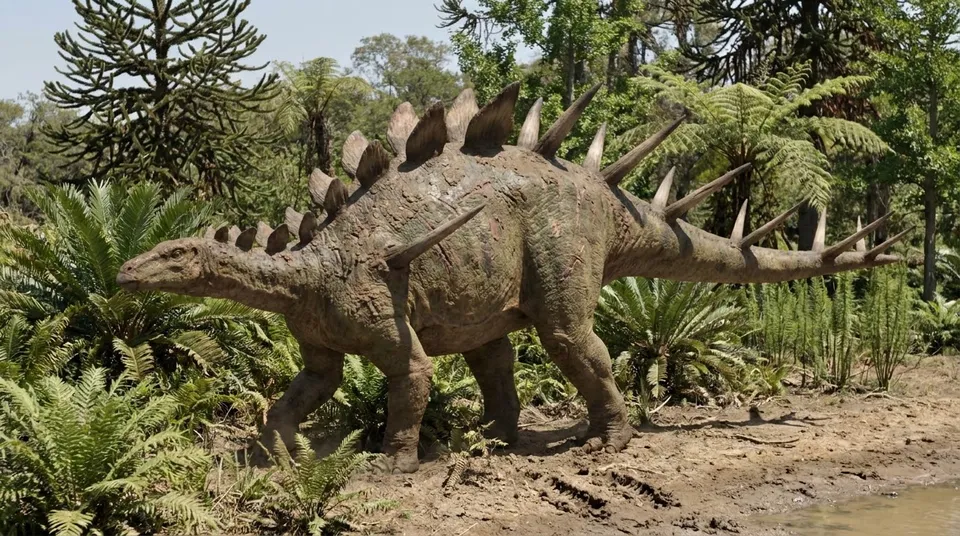
The African stegosaur
Kentrosaurus was a stegosaur that lived in what is now Tanzania about 152 million years ago. Its fossils come from the Tendaguru beds, a famous site excavated by German expeditions between 1909 and 1912, which also produced the giant sauropod Giraffatitan. Edwin Hennig named it in 1915.
It was much smaller than Stegosaurus, around 4 to 4.5 metres long and probably weighing between about 700 kilograms and 1.6 tonnes.
Plates turning into spikes
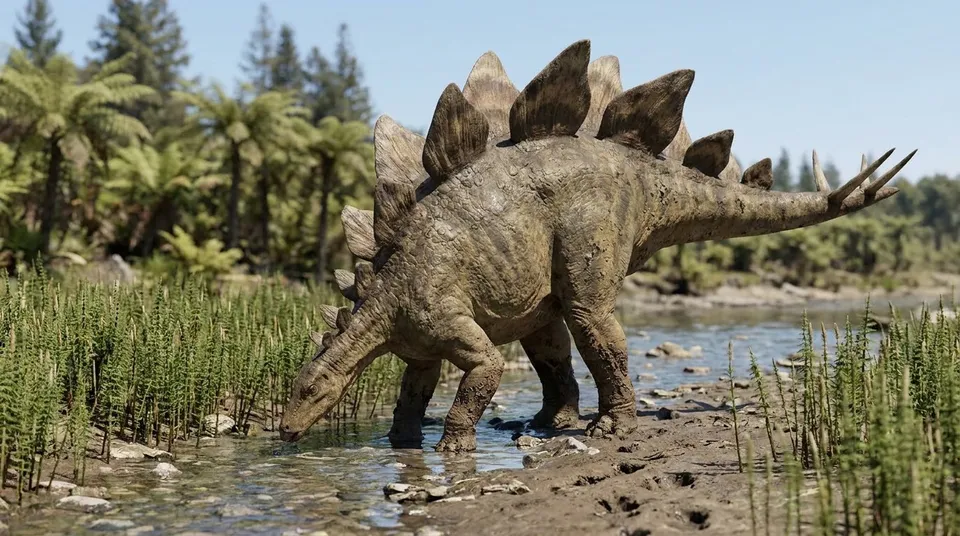
Kentrosaurus had two rows of small plates along its neck and the front of its back. Towards the hips they became narrow spikes, and the tail carried paired spikes all the way to the tip. It also had a long spike on each shoulder, which probably protected its sides.
A biomechanical study using 3D scans of the skeleton showed that its tail could swing quickly through a wide arc. With those spikes, it would have been a serious weapon against predators.
The lost fossils
Large numbers of Kentrosaurus bones were collected in Tanzania and shipped to Germany, but much of that material has since been lost or destroyed. Today the mounted skeleton in Berlin’s Museum für Naturkunde is one of the main sources of information about the animal.
The world of Tendaguru
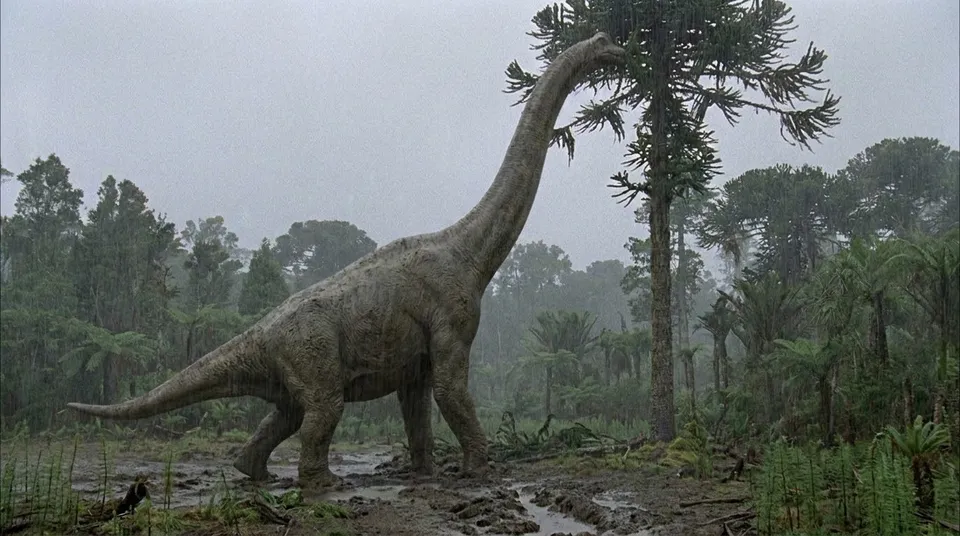
Kentrosaurus shared its home with a rich community of animals. The Tendaguru beds have produced the giant sauropods Giraffatitan, Dicraeosaurus and Tornieria, the small plant-eater Dysalotosaurus, known from hundreds of individuals, and predators such as Elaphrosaurus. Pterosaurs flew overhead and early mammals lived in the undergrowth.
The environment was a coastal plain near a shallow sea, with a warm climate and a long dry season. The German expeditions collected more than a thousand Kentrosaurus bones from dozens of individuals, which makes it one of the best-sampled stegosaurs, even after the losses suffered in Berlin.
A spike in the wrong place
For a long time the long side spike of Kentrosaurus was mounted over its hips. Later finds of related stegosaurs with the spike preserved near the shoulder blade convinced most researchers that it belonged on the shoulder, and modern reconstructions put it there.
Digital studies of the Berlin skeleton by Heinrich Mallison also tested how the animal could move. They suggested Kentrosaurus could rear up on its hind legs, perhaps supported by its tail like a tripod, to reach higher plants. The same models showed how far and how fast its tail could swing, which is why it is thought to have been a dangerous animal to attack.
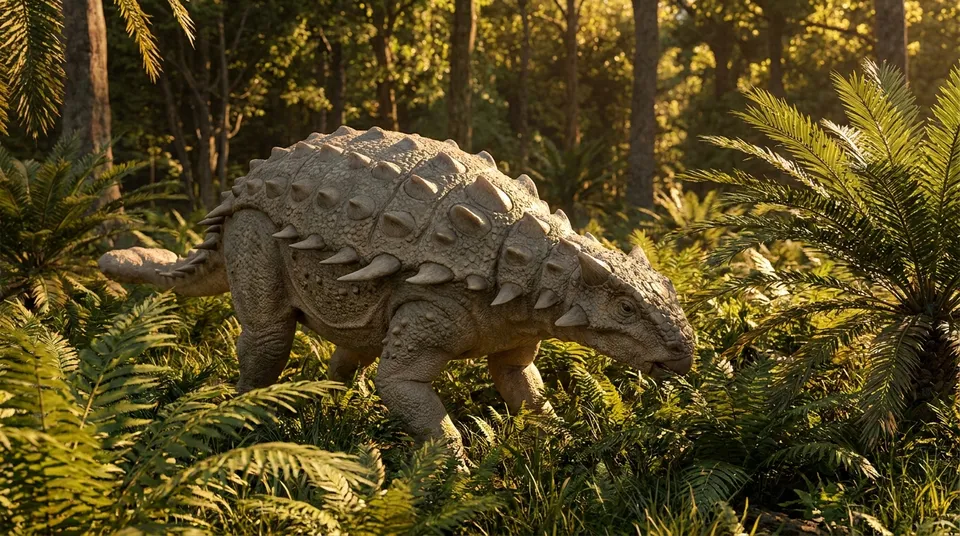
Measurements are estimates based on fossils and can change as new specimens are found. Illustrations on this page are artist reconstructions, not photographs.
 See it in our documentaryA Day in the Jurassic21 min · chapters, the science behind the film and sources