The bat-winged dinosaur
Yi qi was a tiny feathered dinosaur from China, described in 2015 from a single fossil found by a farmer in rocks about 160 million years old. Its name, Mandarin for “strange wing”, is the shortest name of any dinosaur.
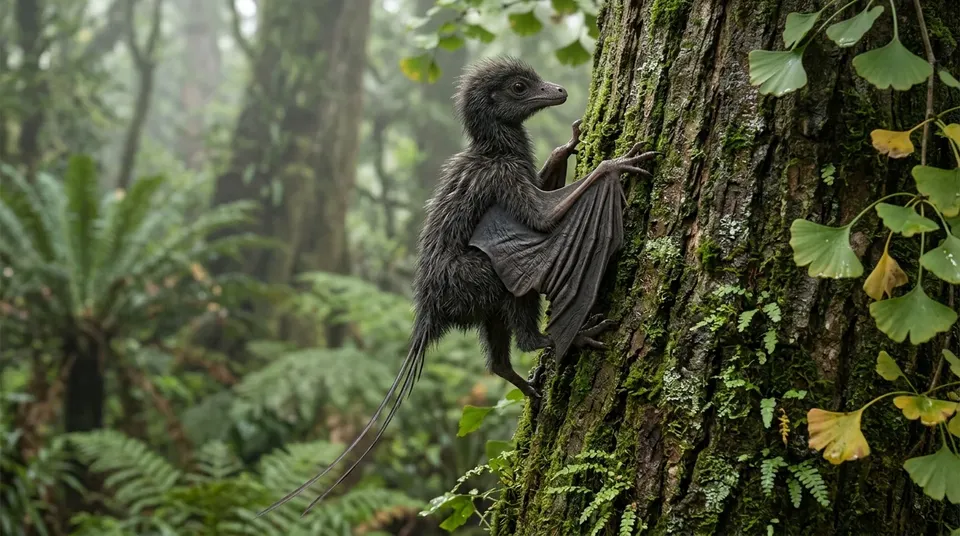
It weighed less than 400 grams, about as much as a pigeon. What made it astonishing was a long, rod-like bone sticking out from each wrist, with patches of membrane preserved between that rod and its fingers. That arrangement suggests a wing made of skin, more like a bat’s than a bird’s.
Could it fly?
Yi qi belonged to the scansoriopterygids, small tree-climbing relatives of birds. A second membrane-winged member of the group, Ambopteryx, was described in 2019, showing that Yi was not a one-off.
How well they flew is debated. Later studies suggest they were at best clumsy gliders, launching from trees, rather than powered fliers. Their line died out: Yi qi was a failed experiment in flight, while the feathered wings of birds succeeded.
A wing made with a new bone
The fossil of Yi qi was found in Hebei Province, in northern China, in rocks of the Tiaojishan Formation. It was described in 2015 in the journal Nature by a team led by Xu Xing.
What made it so strange was a long, rod-like bone sticking out from each wrist, called a styliform element. Patches of preserved soft tissue around it suggested it supported a membrane of skin, like the wings of bats or flying squirrels. No other dinosaur was known to have anything like it. Yi qi also had short, stiff feathers over its body, and its close relative Epidexipteryx had long ribbon-like tail feathers used for display.
Many experiments in flight
Powered flight evolved at least three times in back-boned animals: in pterosaurs, in birds and in bats. Among feathered dinosaurs there seem to have been several experiments with gliding and flying. Microraptor, from the Early Cretaceous of China, had feathered wings on both its arms and its legs.
Yi qi and Ambopteryx show that, close to the origin of birds, at least one group tried a completely different approach, with membranes instead of feathered wings. A 2020 study modelling their aerodynamics concluded they were probably poor gliders. That branch did not last, and the feathered wing became the design that survived in birds.
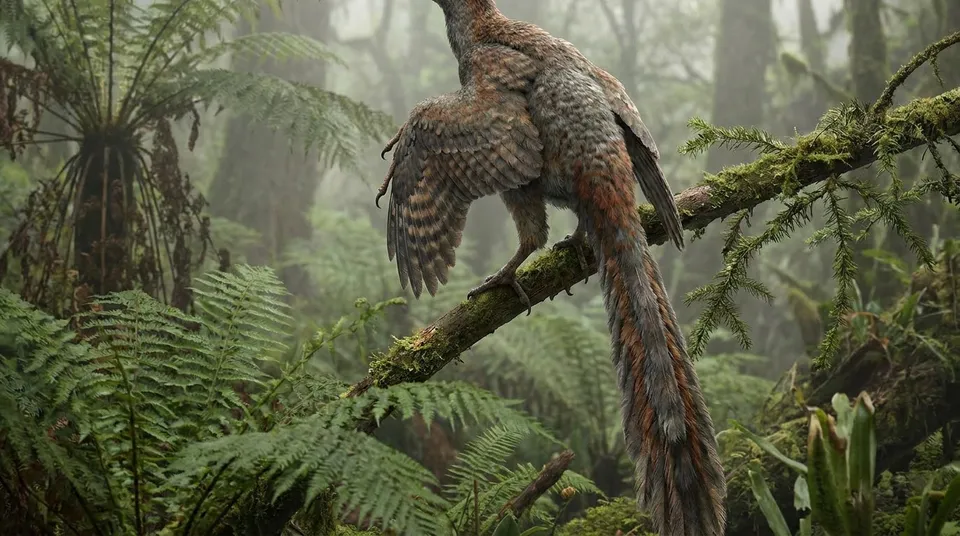
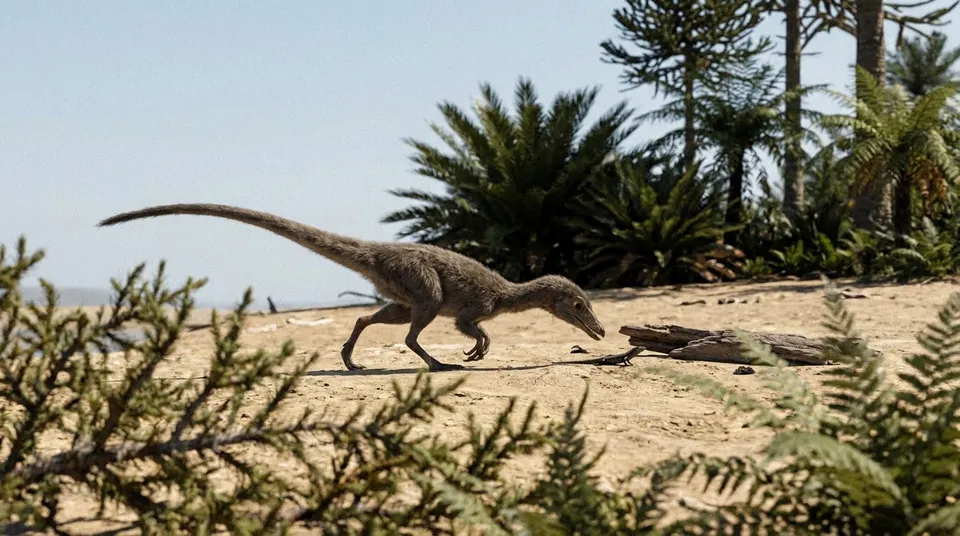
Measurements are estimates based on fossils and can change as new specimens are found. Illustrations on this page are artist reconstructions, not photographs.
 See it in our documentaryA Day in the Jurassic21 min · chapters, the science behind the film and sources
Sources
- Xu et al. (2015). A bizarre Jurassic maniraptoran theropod with preserved evidence of membranous wings. Nature 521.
- Wang et al. (2019). A new Jurassic scansoriopterygid and the loss of membranous wings in theropod dinosaurs. Nature 569.
- Dececchi et al. (2020). Aerodynamics show membrane-winged theropods were a poor gliding dead-end. iScience 23.