
The science behind the film
The footprints at White Sands
In White Sands National Park, New Mexico, the dry bed of an ancient lake called Lake Otero preserves thousands of fossil footprints of people and Ice Age animals. In 2021 researchers dated seeds of a water plant in layers above and below some human footprints to between about 23,000 and 21,000 years ago, during the coldest part of the last Ice Age. That was thousands of years earlier than many scientists thought people had reached the Americas.
The dates were challenged, so a second team dated the same layers in two independent ways, using pollen and grains of quartz. Their results, published in 2023, agreed with the original ages. The debate is not completely closed, but White Sands is now some of the strongest evidence for people in North America during the Last Glacial Maximum.
An out-and-back journey
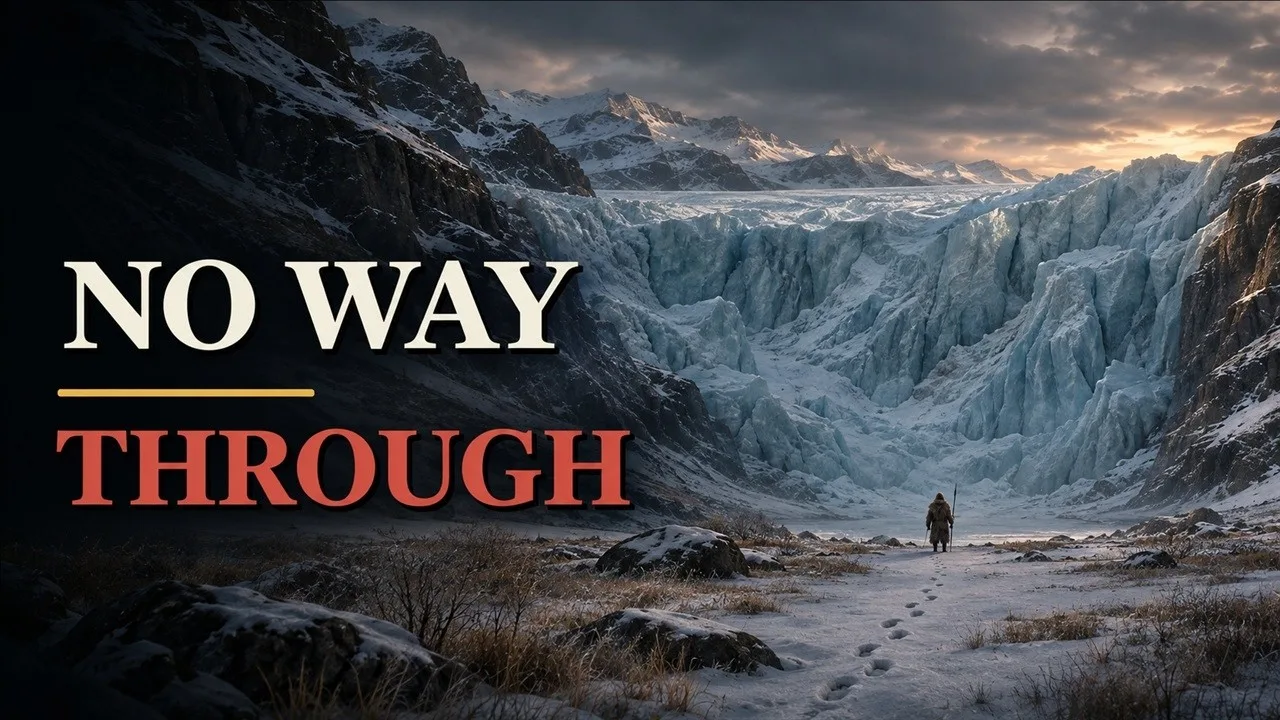
One trackway at White Sands runs for more than 1.5 kilometres in an almost straight line, then returns. The prints were made by one adult, probably a woman or an adolescent, walking quickly over wet, slippery mud. In a few places small child footprints appear beside the adult’s on the outward journey, as if a toddler was carried and set down for a moment. On the way back there are no child prints.
Between the two journeys, a mammoth and a giant ground sloth crossed the path. The researchers suggest the sloth reacted to the person’s scent, while the mammoth seems to have walked on undisturbed. It is a rare snapshot of a few hours in the life of one person and the animals around them.
People and ground sloths
Another discovery at White Sands, published in 2018, shows human footprints stepping inside the tracks of a giant ground sloth. At the same site, sloth trackways show sudden turns and circles where the animal appears to have reared up on its hind legs and swung its arms, possibly defending itself. The researchers interpreted this as evidence of people stalking or confronting the sloth. Ground sloths had massive claws and were dangerous animals to approach.
The La Brea Tar Pits
In the centre of Los Angeles, natural asphalt has been seeping to the surface for tens of thousands of years. Animals that became trapped attracted predators and scavengers, which were trapped in turn. The result is one of the richest Ice Age fossil sites on Earth, with millions of fossils, including thousands of dire wolves and more than two thousand Smilodon.
Dire wolves were not just big grey wolves. A study of their DNA in 2021 found that they belonged to a separate lineage that split from the ancestors of grey wolves millions of years ago. In 2025 the company Colossal Biosciences announced grey wolves with edited genes to resemble dire wolves. Many scientists pointed out that these animals are modified grey wolves, not true dire wolves.
Why the giants disappeared
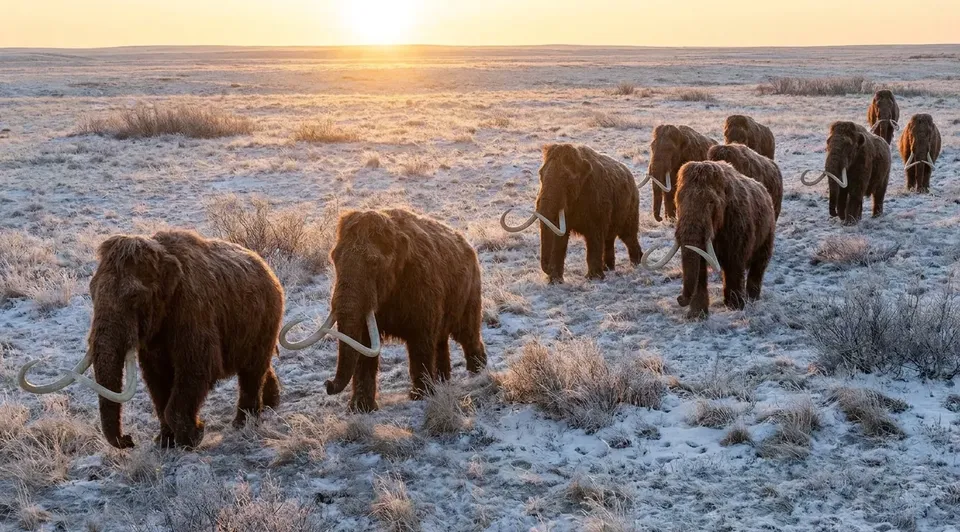
Between about 50,000 and 10,000 years ago, most of the world’s largest land mammals disappeared. North America lost its mammoths, mastodons, ground sloths, horses, camels, sabre-toothed cats and giant bears. The two leading explanations are rapid climate change at the end of the Ice Age and hunting by people, who were spreading into new continents. Many researchers think both played a role, and the balance probably differed from place to place.
The film’s scenes are AI-assisted reconstructions based on published evidence. Some behaviour and colours are informed interpretation.
Read the complete guide to the Ice Age →
Sources
- Bennett et al. (2021). Evidence of humans in North America during the Last Glacial Maximum. Science 373.
- Pigati et al. (2023). Independent age estimates resolve the controversy of ancient human footprints at White Sands. Science 382.
- Bennett et al. (2020). Walking in mud: remarkable Pleistocene human trackways from White Sands National Park. Quaternary Science Reviews 249.
- Bustos et al. (2018). Footprints preserve terminal Pleistocene hunt? Human-sloth interactions in North America. Science Advances 4.
- Perri et al. (2021). Dire wolves were the last of an ancient New World canid lineage. Nature 591.
- La Brea Tar Pits & Museum.
- Government of Yukon. Nun cho ga, the mummified mammoth calf.