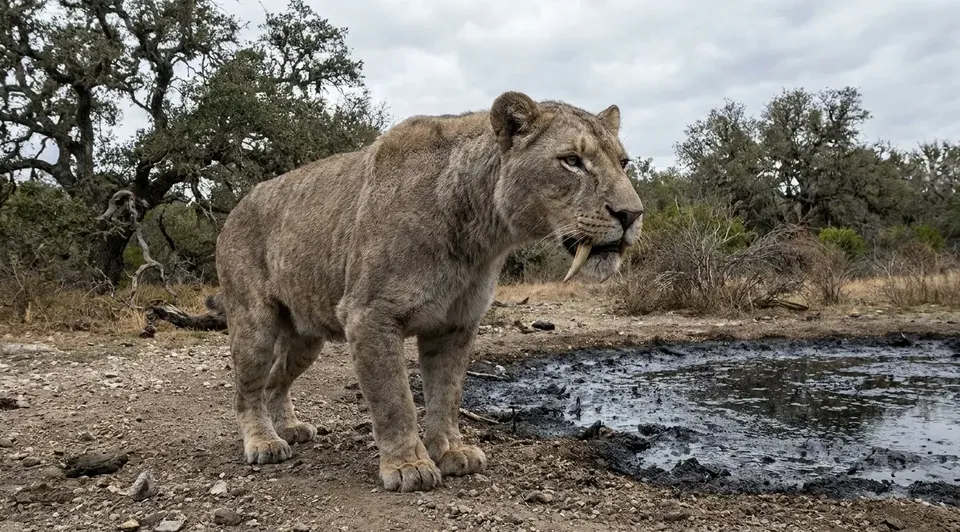
Not a tiger
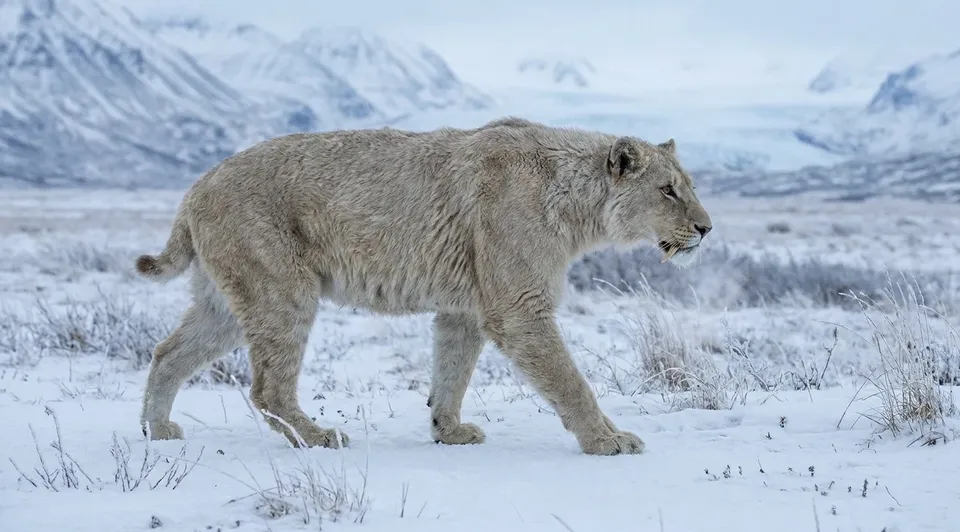
Smilodon is often called the “sabre-toothed tiger”, but it was not a tiger or closely related to any living cat. It belonged to the machairodonts, an extinct branch of the cat family. Smilodon fatalis lived in North America and the west of South America during the Ice Age; its larger cousin, Smilodon populator, lived in eastern South America and may have weighed more than 300 kilograms.
S. fatalis was heavier and more robust than a lion, with very powerful front legs, a short tail and upper canine teeth up to about 18 centimetres long.
Trapped at La Brea
The La Brea Tar Pits in Los Angeles are natural asphalt seeps. Large animals that got stuck attracted predators and scavengers, which got stuck too. Over tens of thousands of years this created one of the richest Ice Age fossil sites in the world, with remains of more than two thousand Smilodon and several thousand dire wolves.
Because there are so many, scientists can study Smilodon at every age and with every kind of injury. Some individuals had serious healed injuries or diseases that would have made hunting difficult, which some researchers interpret as evidence that they lived in groups and shared food. Others argue that injured cats could have survived by scavenging. Smilodon is the state fossil of California.
How did it use those teeth?
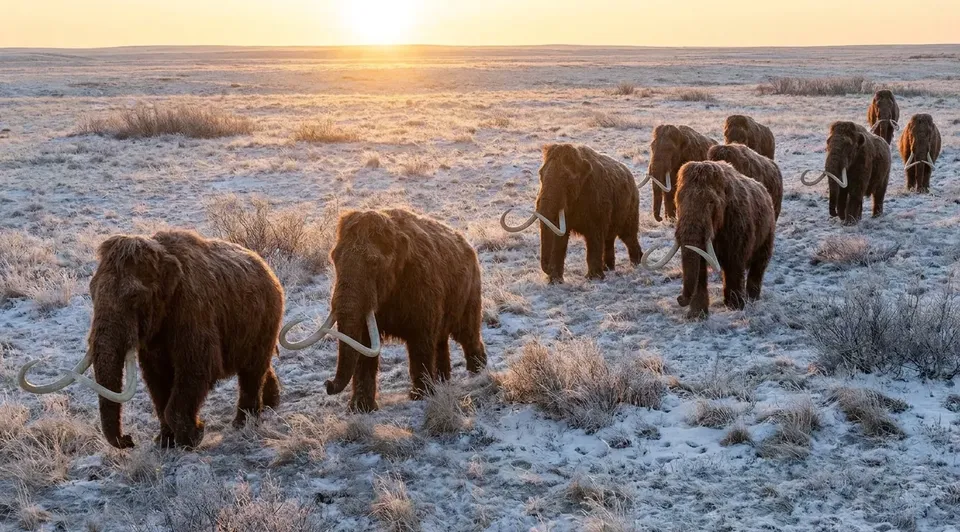
Smilodon’s canines were long but relatively thin and could break against bone. Its bite was weak for its size, but it could open its mouth very wide. The most widely accepted idea is that it pinned large prey such as bison, horses or young mammoths with its powerful forelimbs, then made a precise bite to the throat that cut major blood vessels and the windpipe.
Isotope studies of La Brea bones suggest Smilodon preferred prey animals that lived in more wooded areas, while dire wolves took more animals from open grassland. Woodland suits an ambush hunter.
Extinction
Smilodon disappeared around 10,000 years ago, at the end of the last Ice Age, along with many of the large mammals it hunted. The loss of big prey, climate change and the arrival of humans are all thought to have played a part.
Measurements are estimates based on fossils and can change as new specimens are found. Illustrations on this page are artist reconstructions, not photographs.
 See it in our documentaryWe Are Here Thanks to Them: the Ice Age8 min · chapters, the science behind the film and sources
Sources
- La Brea Tar Pits & Museum. Fossils of La Brea.
- Christiansen & Harris (2005). Body size of Smilodon (Mammalia: Felidae). Journal of Morphology 266.
- Wroe et al. (2005). Bite club: comparative bite force in big biting mammals. Proceedings of the Royal Society B.
- DeSantis et al. (2019). Causes and consequences of Pleistocene megafaunal extinctions as revealed from Rancho La Brea mammals. Current Biology 29.
- Carbone et al. (2009). Parallels between playbacks and Pleistocene tar seeps suggest sociality in an extinct sabretooth cat, Smilodon. Biology Letters 5.