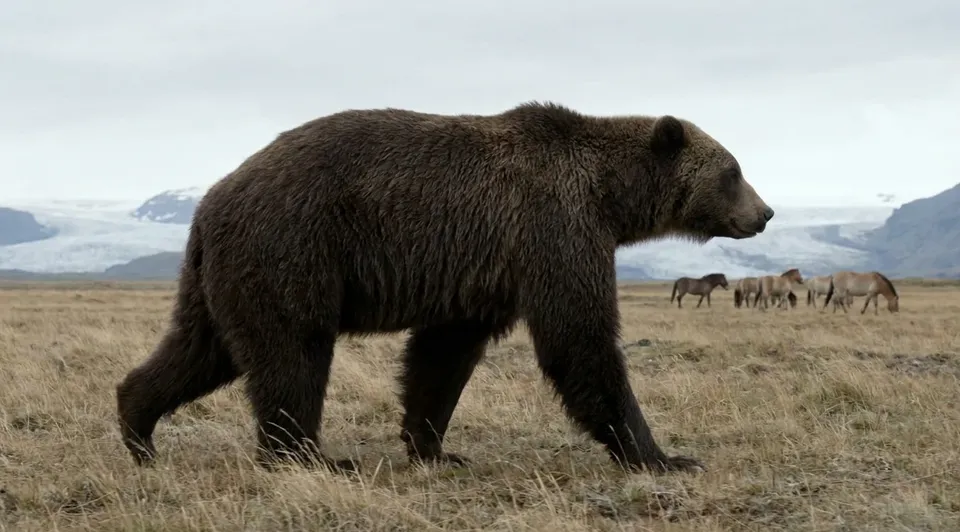
A giant bear of the Ice Age
The giant short-faced bear lived across North America during the Pleistocene. Big males may have weighed up to around 900 kilograms. On all fours it stood about 1.5 metres at the shoulder, and rearing up on its hind legs it would have been over 3 metres tall.
It belonged to an extinct group of bears whose only living relative is the spectacled bear of South America. A South American cousin, Arctotherium, may have been the largest bear that ever lived.
Long legs, and a face that only looks short
Arctodus had unusually long legs, which made it look lanky compared with a grizzly. Its name comes from its short, broad muzzle, but studies of its skull show the face is not really shorter than other bears’: the snout is just very deep, which creates the illusion.
Hunter, scavenger or omnivore?
For a long time Arctodus was described as a fast super-predator that ran down horses and bison. Later studies of its skull and teeth suggested it was an omnivore, eating plants as well as meat, like most bears. Chemical studies of bones from different regions give different answers: some populations, especially in Beringia, ate mostly meat, possibly by scavenging and driving other predators off their kills.
The honest answer is that it probably varied by region and season. It remains one of the most debated Ice Age predators.
Extinction
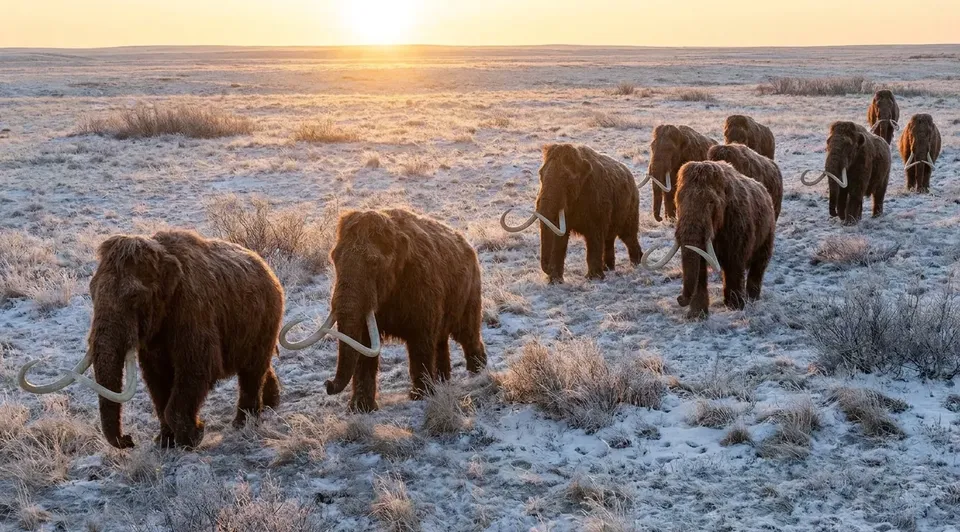
Arctodus disappeared about 12,000 years ago, along with mammoths, Smilodon, ground sloths and many other North American giants. Humans had arrived in the Americas by then, and the climate was changing rapidly, and both are thought to have contributed.
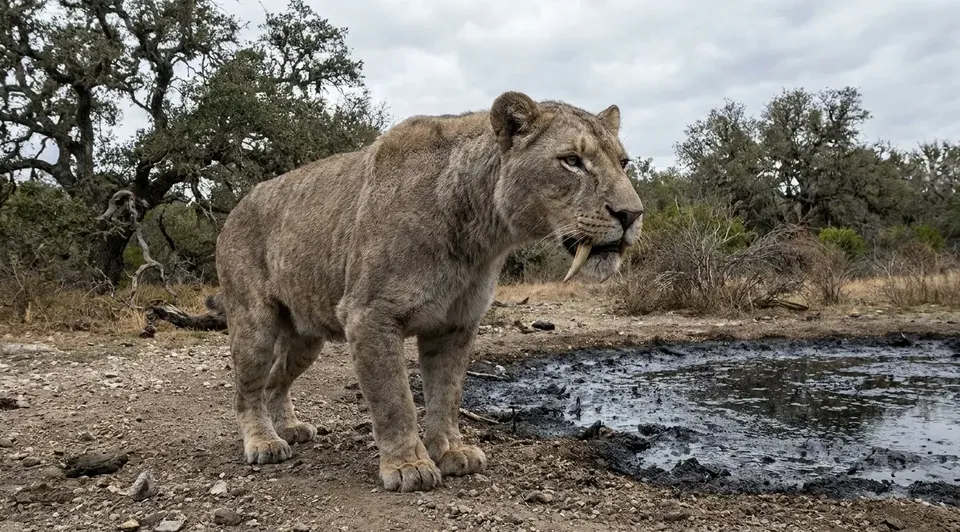
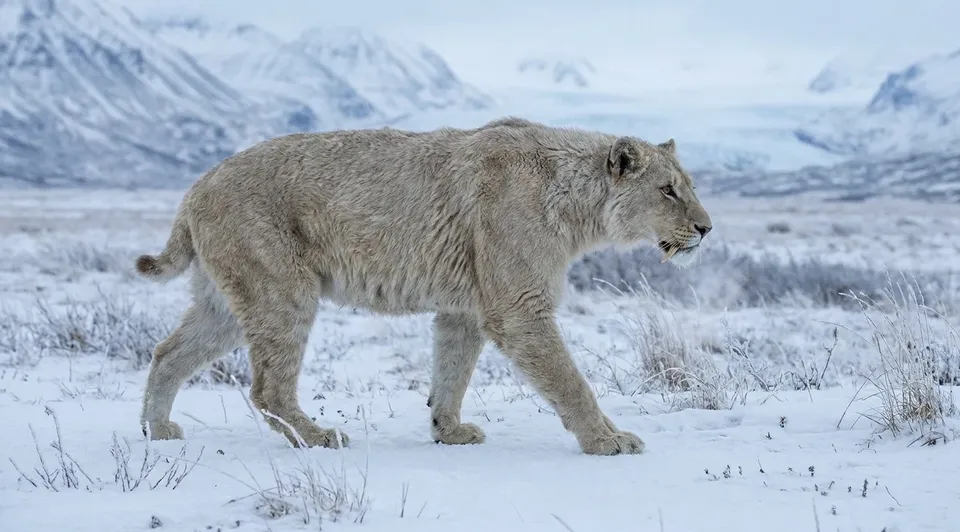
Measurements are estimates based on fossils and can change as new specimens are found. Illustrations on this page are artist reconstructions, not photographs.
 See it in our documentaryWe Are Here Thanks to Them: the Ice Age8 min · chapters, the science behind the film and sources
Sources
- Figueirido et al. (2010). Demythologizing Arctodus simus, the “short-faced” long-legged and predaceous bear that never was. Journal of Vertebrate Paleontology 30.
- Fox-Dobbs, Leonard & Koch (2008). Pleistocene megafauna from eastern Beringia: stable isotope and radiocarbon records. Palaeogeography, Palaeoclimatology, Palaeoecology 261.
- Soibelzon & Schubert (2011). The largest known bear, Arctotherium angustidens. Journal of Paleontology 85.