An elephant built for the cold
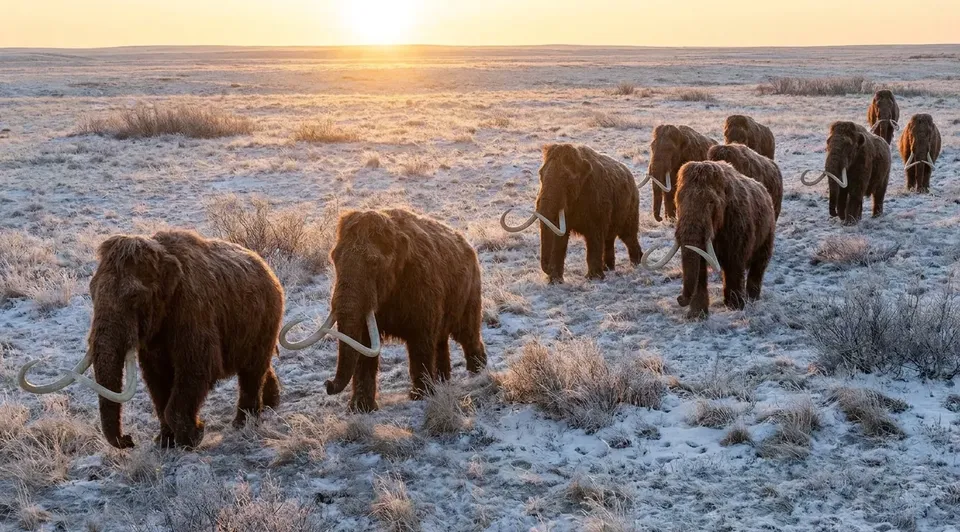
The woolly mammoth was a close relative of today’s Asian elephant. Males stood about 2.7 to 3.4 metres at the shoulder and weighed roughly 4 to 6 tonnes, similar to an African elephant. It evolved in north-eastern Siberia and spread across northern Eurasia and into North America, living on the mammoth steppe, a cold, dry grassland that stretched from Spain to Canada during glacial times.
Fur, fat and small ears
Its body was covered by a thick undercoat and long outer guard hairs. It had small ears and a short tail, which lose less heat than the large ears of living elephants, a thick layer of fat under the skin and a flap of skin protecting the anus from frost. Its haemoglobin, the protein that carries oxygen in blood, was adapted to release oxygen at low temperatures, as a 2010 study using ancient DNA showed.
Mammoths ate mostly grasses, sedges and other low plants. Their huge, ridged molar teeth ground tough vegetation, and like elephants they went through six sets of molars in a lifetime.
Frozen in time
Mammoth carcasses preserved in permafrost have given scientists skin, hair, muscle and even stomach contents. Lyuba, a baby female found in Siberia in 2007, is about 42,000 years old and almost complete.
In 2022 a gold miner in the Klondike region of Canada’s Yukon found a mummified mammoth calf about 30,000 years old. The Tr’ondëk Hwëch’in First Nation named her Nun cho ga, meaning “big baby animal”. She is the most complete mummified mammoth found in North America.
A 2021 study of chemical signatures in a male mammoth’s tusk from Alaska showed it travelled so much during its 28-year life that it could have circled the Earth almost twice.
Mammoths and people
Mammoths and humans lived side by side for tens of thousands of years. People ate their meat, used their bones and tusks for tools and art, and in Ukraine and Russia built large circular structures from hundreds of mammoth bones. Some sites show clear hunting; others show scavenging of animals that died naturally.
The last mammoths
As the Ice Age ended about 11,700 years ago, the mammoth steppe shrank and was replaced by forest and wet tundra. Woolly mammoths disappeared from most of their range at about this time. Most scientists think a combination of climate change and human hunting was responsible, although how much each mattered is debated.
Small populations survived on islands. Mammoths lived on St Paul Island in Alaska until about 5,600 years ago and on Wrangel Island in the Arctic Ocean until about 4,000 years ago, when the pyramids of Egypt had already been built.
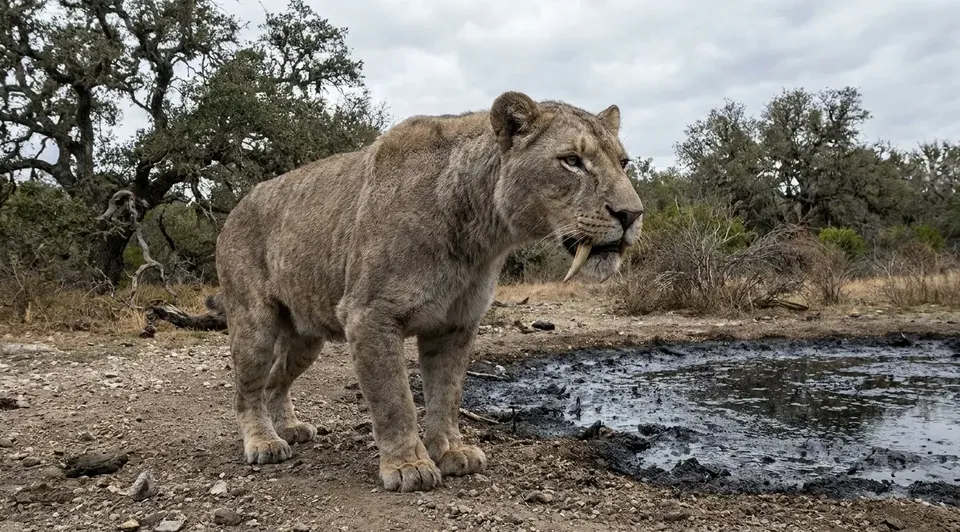
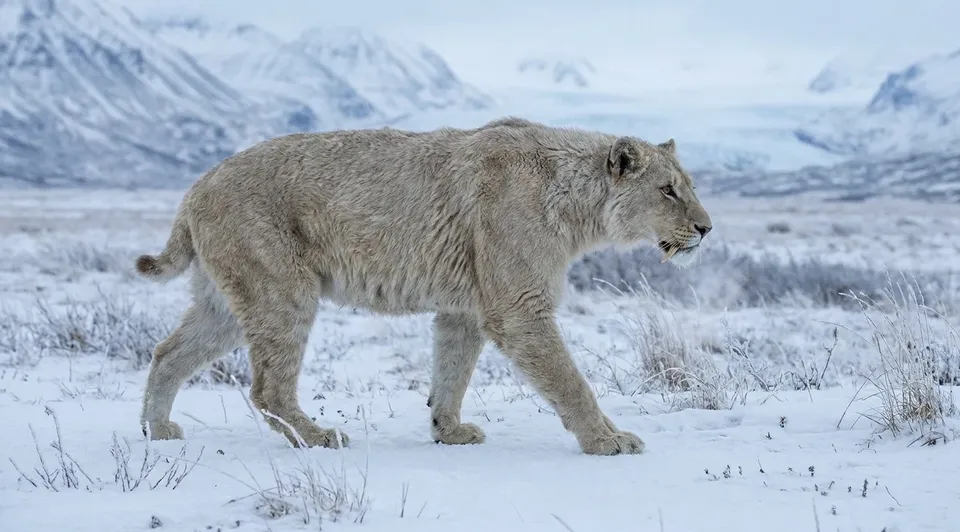
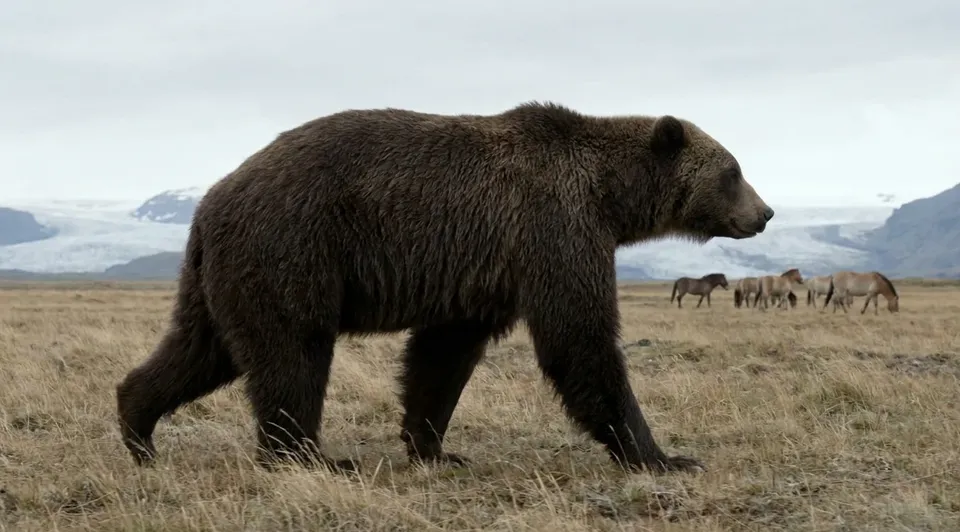
Measurements are estimates based on fossils and can change as new specimens are found. Illustrations on this page are artist reconstructions, not photographs.
 See it in our documentaryWe Are Here Thanks to Them: the Ice Age8 min · chapters, the science behind the film and sources
Sources
- Government of Yukon. Nun cho ga, the mummified mammoth calf.
- Campbell et al. (2010). Substitutions in woolly mammoth hemoglobin confer biochemical properties adaptive for cold tolerance. Nature Genetics 42.
- Wooller et al. (2021). Lifetime mobility of an Arctic woolly mammoth. Science 373.
- Graham et al. (2016). Timing and causes of mid-Holocene mammoth extinction on St. Paul Island, Alaska. PNAS 113.
- Vartanyan et al. (1993). Holocene dwarf mammoths from Wrangel Island in the Siberian Arctic. Nature 362.
- Fisher et al. (2012). Anatomy, death, and preservation of a woolly mammoth calf (Lyuba). Journal of Paleontology.