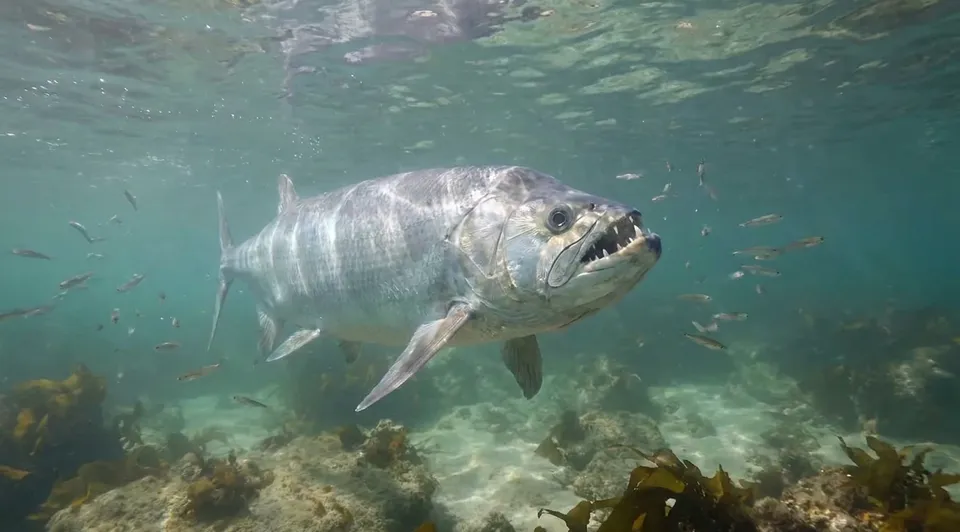
A fish as long as a car
Xiphactinus was one of the largest bony fish of the Cretaceous, reaching about 4.5 to 6 metres. It belonged to the ichthyodectiforms, an extinct group of predatory fish. It had a deep, muscular body, a deeply forked tail for speed and an upturned lower jaw that gave it a bulldog-like face, lined with long, fang-like teeth.
It was described by the American palaeontologist Joseph Leidy in 1870. Its fossils are particularly common in the Niobrara Chalk of Kansas, laid down on the floor of the Western Interior Seaway.
The fish within a fish
The most famous Xiphactinus fossil is on display at the Sternberg Museum of Natural History in Hays, Kansas. Collected by George F. Sternberg in 1952, it is a four-metre Xiphactinus with an almost complete two-metre fish, Gillicus, inside its body.
The prey was swallowed head first and is not digested, which suggests the predator died soon afterwards. A popular explanation is that the struggling meal was too large and damaged the Xiphactinus from the inside, although this cannot be proven. The fossil is a rare, direct snapshot of a hunt 85 million years ago.
Predator and prey
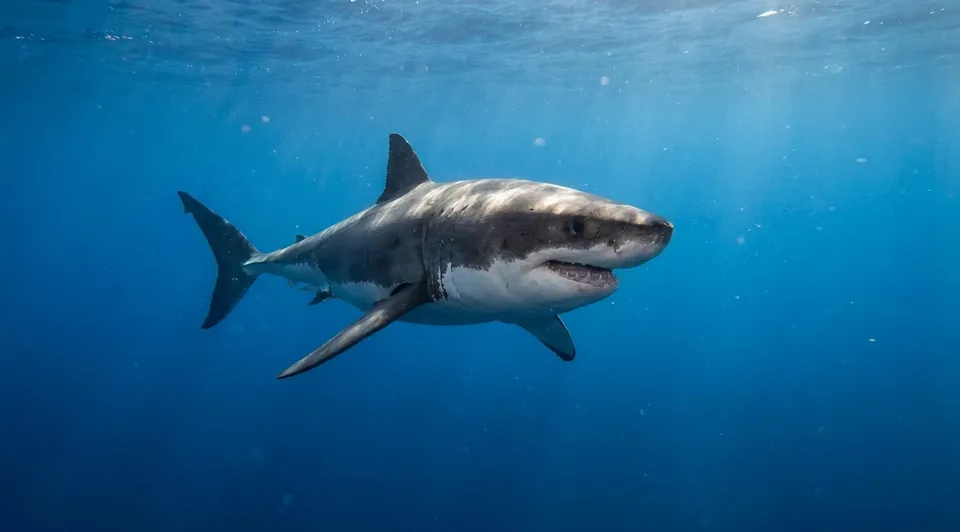
Xiphactinus swallowed its prey whole, like many modern predatory fish. Several other specimens contain fish remains in the gut. It was also hunted itself: Xiphactinus bones with bite marks and embedded teeth show it was eaten by sharks such as Cretoxyrhina and Squalicorax, whether alive or as carcasses.
The end
Xiphactinus and its relatives disappeared at the end of the Cretaceous, 66 million years ago, in the same extinction that wiped out the non-bird dinosaurs and the mosasaurs.
Measurements are estimates based on fossils and can change as new specimens are found. Illustrations on this page are artist reconstructions, not photographs.
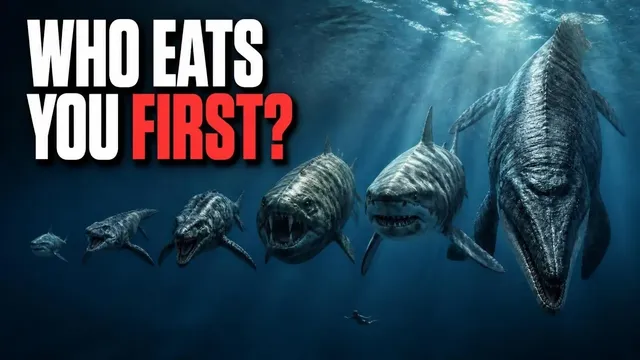 See it in our documentaryWhat Eats You First? The Sea That Covered Kansas12 min · chapters, the science behind the film and sources
Sources
- Leidy (1870). Remarks on Xiphactinus audax. Proceedings of the Academy of Natural Sciences of Philadelphia.
- Sternberg Museum of Natural History. The fish-within-a-fish.
- Everhart (2017). Oceans of Kansas. Indiana University Press.
- Shimada & Everhart (2004). Shark-bitten Xiphactinus audax from the Upper Cretaceous of Kansas. The Mosasaur.