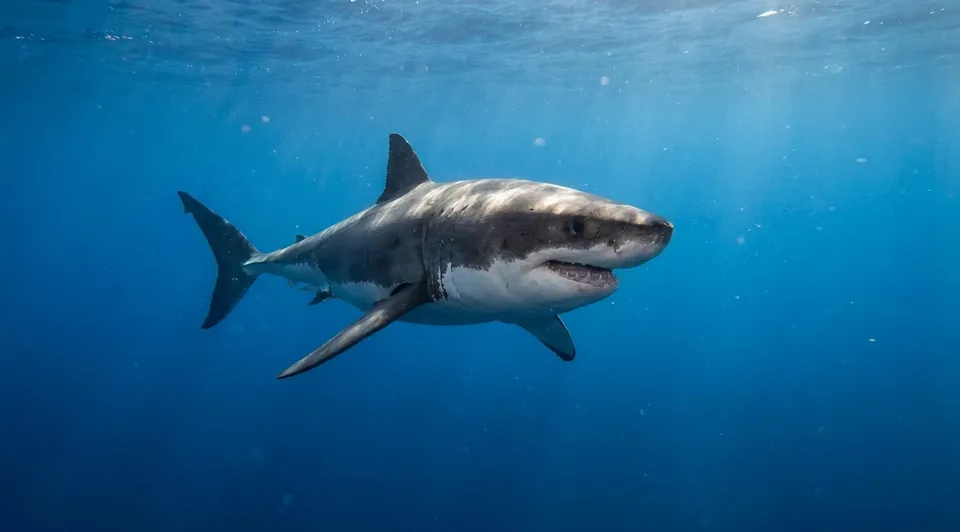
The Ginsu shark
Cretoxyrhina was a large lamniform, or mackerel shark, the group that today includes great whites, makos and basking sharks. It lived for more than 30 million years in seas around the world, and is nicknamed the “Ginsu shark” after a brand of kitchen knives, because of its sharp, smooth-edged teeth.
It was not an ancestor of the great white, which appeared tens of millions of years later, but it filled a similar role: a fast, powerful predator able to tackle large prey.
Size and skeleton
Shark skeletons are made of cartilage and rarely fossilise, so most extinct sharks are known only from teeth. Cretoxyrhina is an exception. The chalk of western Kansas has produced several remarkably complete specimens with jaws, teeth and long runs of vertebrae, including one collected by the famous fossil hunter Charles H. Sternberg in 1890.
These fossils suggest the largest individuals reached about 7 metres, and possibly a little more. Growth rings in the vertebrae have been used to estimate that it grew quickly, matured in a few years and could live for several decades.
Bite marks in the bones
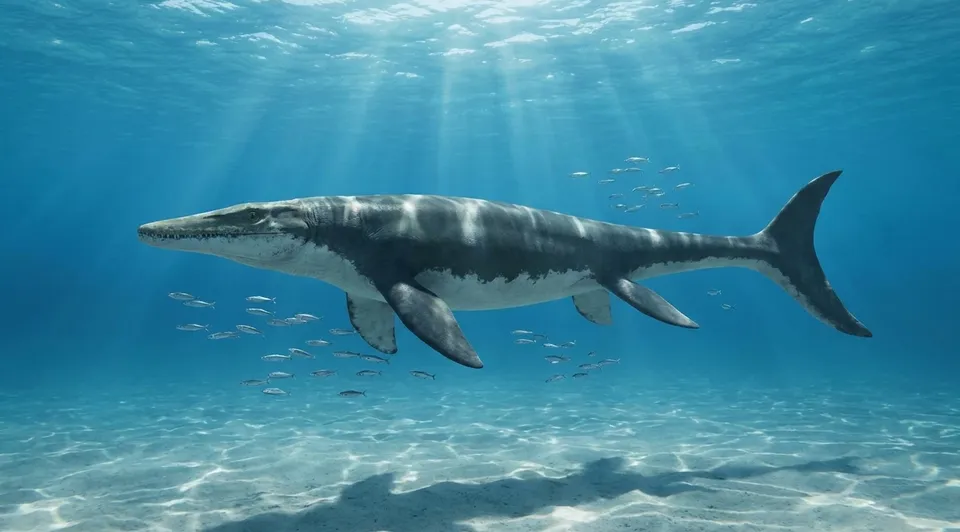
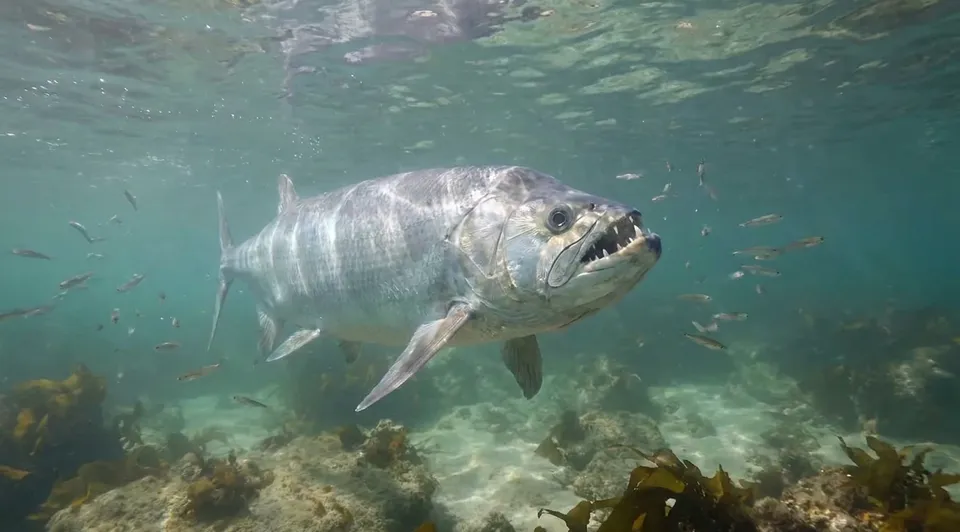
The best evidence for what Cretoxyrhina ate comes from damage on other animals. Its teeth have been found embedded in, and bite marks matched on, the bones of mosasaurs, plesiosaurs, large sea turtles and big bony fish from the Niobrara Chalk. Some of these marks were made on living animals; others look like scavenging of carcasses.
Its teeth were large and blade-like, without the serrations of a great white, suited to grabbing and cutting large prey.
Disappearance
Cretoxyrhina disappears from the fossil record around 73 million years ago, several million years before the end of the Cretaceous. Why is unclear. One idea is competition from mosasaurs, which were becoming larger and more diverse at the time.
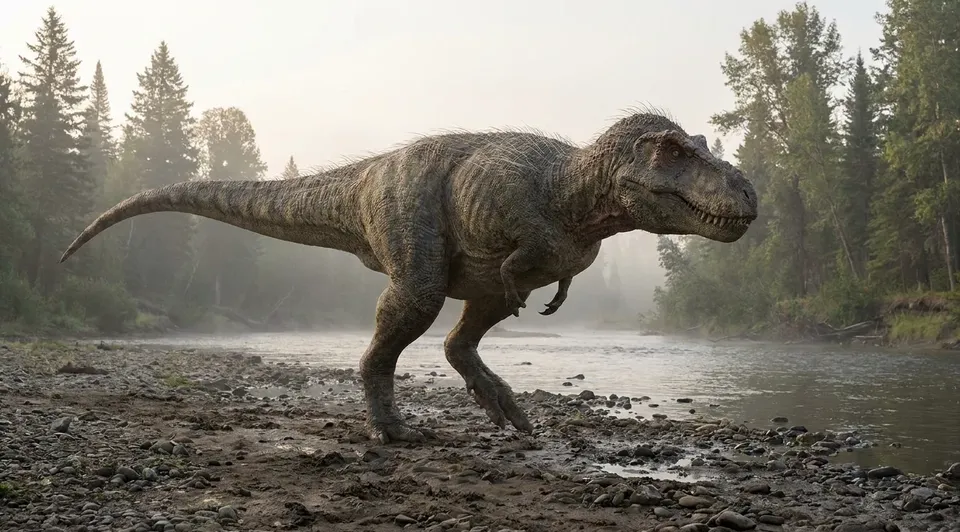
Measurements are estimates based on fossils and can change as new specimens are found. Illustrations on this page are artist reconstructions, not photographs.
 See it in our documentaryWhat Eats You First? The Sea That Covered Kansas12 min · chapters, the science behind the film and sources
Sources
- Shimada (1997). Skeletal anatomy of the Late Cretaceous lamniform shark Cretoxyrhina mantelli from the Niobrara Chalk in Kansas. Journal of Vertebrate Paleontology.
- Shimada (2008). Ontogenetic parameters and life history strategies of the Late Cretaceous lamniform shark Cretoxyrhina mantelli. Journal of Vertebrate Paleontology.
- Everhart. Oceans of Kansas: shark bite marks on Niobrara vertebrates.