Species go extinct all the time; it is a normal part of life on Earth. A mass extinction is different: a geologically short period when a large share of all species on the planet disappear at once. Palaeontologists usually recognise five of these events in the last 540 million years, called the “Big Five”. Each one reshaped life and opened the way for new groups to take over.
The percentages below are estimates. They are based on the fossil record, which is incomplete, so different studies give different numbers.
1. End-Ordovician, about 445 million years ago
Almost all life lived in the sea. The extinction happened in two pulses linked to a short but intense ice age: as ice sheets grew over the southern supercontinent Gondwana, sea levels fell, shallow seas drained and ocean temperatures and chemistry changed. Around 85 percent of marine species are thought to have disappeared, including many trilobites, brachiopods and early reef builders.
2. Late Devonian, about 372 and 359 million years ago
The Devonian, the “Age of Fishes”, ended with a series of crises rather than a single blow. The two biggest pulses wiped out most of the great reef ecosystems and the armoured fish called placoderms, including the giant Dunkleosteus. Low-oxygen conditions spread through the oceans. Possible causes include climate swings, volcanic activity and the spread of the first forests, which changed soils and sent nutrients into the sea.
3. End-Permian, 251.9 million years ago: the Great Dying
The largest extinction in Earth’s history. Around 80 to 90 percent of marine species and a large proportion of land animals vanished, and it is the only mass extinction known to have hit insects hard. The main cause was enormous volcanic eruptions in Siberia, the Siberian Traps, which released huge amounts of carbon dioxide. The result was rapid global warming, acidic and oxygen-poor oceans and extreme heat in the tropics. Recovery took millions of years, and the survivors gave rise to the animals of the Triassic, including the first dinosaurs. Read the Triassic guide.
4. End-Triassic, 201.4 million years ago
As the supercontinent Pangaea began to split, volcanic eruptions known as the Central Atlantic Magmatic Province covered vast areas of what are now the Americas, Africa and Europe. Around three-quarters of species disappeared, including most of the large crocodile relatives that dominated the land and many marine reptiles. Dinosaurs survived and went on to rule the Jurassic. Read the Jurassic guide.
5. End-Cretaceous, 66 million years ago
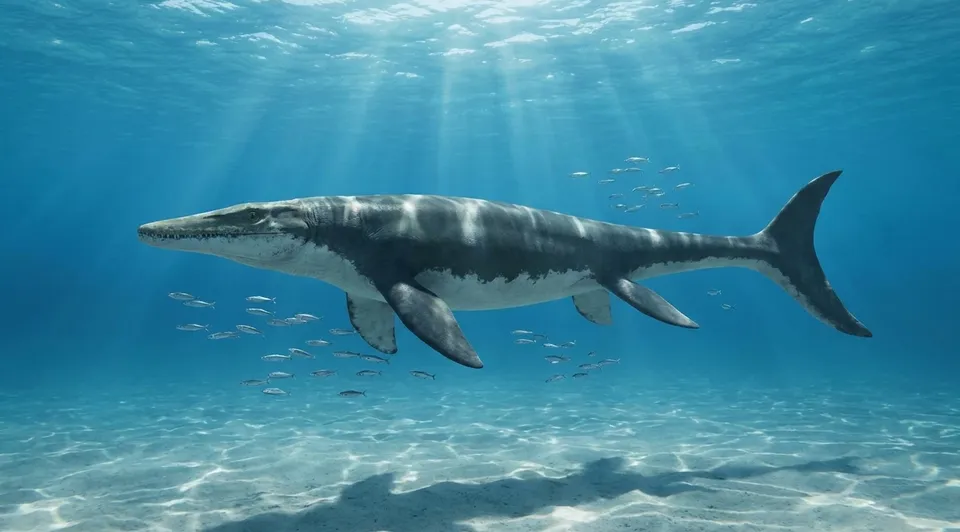
The most famous of all. An asteroid about 10 kilometres wide hit what is now the Yucatán Peninsula in Mexico, leaving the Chicxulub crater. Dust, soot and sulphur blocked sunlight, causing a sudden global winter and the collapse of food chains. Massive volcanic eruptions in India, the Deccan Traps, were also under way. About three-quarters of species died out, including all non-bird dinosaurs, pterosaurs, mosasaurs, plesiosaurs and ammonites. Birds and mammals survived. Read the Cretaceous guide.
What the Big Five have in common
- Rapid climate change is involved in almost every one, either warming or cooling.
- The oceans suffer badly, with falling oxygen levels and changes in chemistry.
- Large volcanic eruptions are linked to at least three of them.
- Survivors take over. After each extinction, groups that had been minor became dominant: dinosaurs after the Triassic, mammals after the Cretaceous.
Is a sixth mass extinction happening now?
Many biologists argue that species are now disappearing much faster than the normal background rate, because of habitat loss, overhunting, invasive species, pollution and climate change. Whether this already counts as a sixth mass extinction is debated, because the share of species lost so far is still far smaller than in the Big Five. Most scientists agree that the current rate of loss is unusually high and could become a mass extinction if it continues.
Key points for your test
- A mass extinction is when a large share of all species disappear in a geologically short time.
- The Big Five: end-Ordovician, Late Devonian, end-Permian, end-Triassic and end-Cretaceous.
- The largest was the end-Permian (252 million years ago), caused mainly by the Siberian Traps eruptions.
- The end-Cretaceous (66 million years ago) was caused by the Chicxulub asteroid and ended the non-bird dinosaurs.
- Each extinction was followed by the rise of new groups.
Sources
- Raup & Sepkoski (1982). Mass extinctions in the marine fossil record. Science 215.
- Bond & Grasby (2017). On the causes of mass extinctions. Palaeogeography, Palaeoclimatology, Palaeoecology 478.
- Burgess, Bowring & Shen (2014). High-precision timeline for Earth’s most severe extinction. PNAS 111.
- Schulte et al. (2010). The Chicxulub asteroid impact and mass extinction at the Cretaceous-Paleogene boundary. Science 327.
- Barnosky et al. (2011). Has the Earth’s sixth mass extinction already arrived? Nature 471.